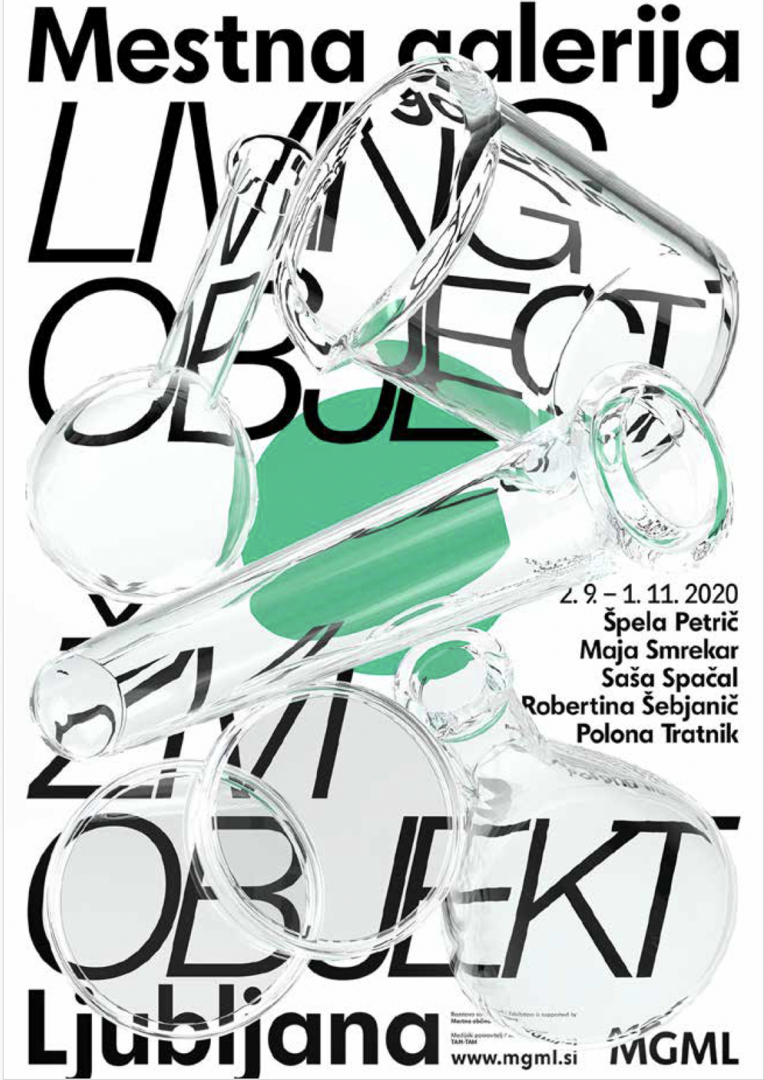
Ingeborg Reichle, "BioArt: From the Culture of the Laboratory to Critical Design Approaches.” In: Live Object. Exhibition catalogue, ed. by City Art Gallery, Ljubljana, 2020, pp. 34-41.
With the rise of BioArt, biotechnology became part of the art world. From the very beginning art that came out of the laboratory provoked a vital debate about the ethics and consequences of turning biology into technology. When BioArt began to appear in galleries and museum contexts in the late 1980s, putting on display synthetic DNA or genetically modified organisms, it became obvious that biotechnology had already crossed the divide between the artificial and the natural way back in the 1970s, without being noticed by the public. However, the science community was well aware of both the opportunities and dramatic risks that came along with the ability to manipulate and recombine DNA: the development of recombinant DNA technology fundamentally changed the way in which molecular structures and processes of living organisms became available for scientific experimentation, which made discussion of potential biohazards and guidelines for the application and safety regulations of biotechnology imperative and indispensable.
By bringing cutting edge technologies closer to the general public, from the outset BioArt raised important questions about the aesthetic and ethical status of modifying DNA and proteins to redesign the capabilities of living cells, plants, and animals into something useful for humans. Rewriting the blueprints of life for artistic purposes provoked passionate debates about the shifting concept of “life” — a concept that has changed dramatically since the arrival of biotechnology during the 20th century within the framework of the emerging technosciences. The non-normative use of biotechnological tools within the realm of the fine arts opened up new perspectives on life and its limits as well as framed controversies about the growing influence of science and technology on the fine arts and our societies at large. If art was able to alter and recreate “nature,” and found ways to design living entities for aesthetic purposes in the same way as art had done for millennia using traditional media, like marble, gold, or wood, then everyone would soon be able to do this as well: remapping the landscape of everyday life in terms of biotechnological mediation and applications.