Plastic Life: Art and Science Responses to Microplastic Pollution. Berlin: De Gruyter, 2026. Edited by Ingeborg Reichle.
The permeation of our biosphere by millions of tons of toxic microplastic particles has fundamentally altered the conditions for the existence of life on Earth. Anthropogenic materials are driving profound ecological transformations that will persist for millions of years, creating new dynamics of adaptation for mammals, other biological organisms, and plants.
This publication brings together numerous international art projects that address the harmful effects of endocrine disruptors and the accumulation of plastic particles in our food chain. Further, it also presents contributions from various scientific disciplines examining the formation of new ecosystems as well as the alarming consequences of ubiquitous microplastic pollution in soil, water, and air.
With contributions by Sam Nester, Jacquelyn Dale (JD) Whitman, Jemma Woolmore, María Antonia González Valerio, Ingeborg Reichle, Nonhuman Nonsense (Leo Fidjeland, Linnea Våglund, and Filips Staņislavskis), Guillermo García-Sánchez, Ernst Logar, Cindy Lam, Frank L. Y. Lam, Xuanming Chen, Kilian Jörg, Clea T. Waite (aka Clea von Chamier-Waite), Alexandra Fruhstorfer, Seçil Uğur Yavuz, and María Menéndez-Blanco.

NaturArchy: Towards a Natural Contract
Ingeborg Reichle, Caterina Benincasa, Adriaan Eeckels, Claudia Schnugg
Caterina Benincasa, Adriaan Eeckels, Ingeborg Reichle, and Claudia Schnugg, eds. NaturArchy: Towards a Natural Contract. European Union / Quodlibet, 2026, two volumes with 582 pages.
This book results from an art-science-policy research project titled NaturArchy. The project brought together artists, scientists and policymakers at the European Commission’s Joint Research Centre to collaborate and co-create on topics of environmental sustainability, the decolonization of Nature, a just green transition and the Rights of Nature. Developed by JRC SciArt, Centre for Advanced Studies, Directorate for Innovation in Science and Policymaking, Joint Research Centre, European Commission.
Volume 1 Artworks:
With contributions by Caterina Benincasa, Adriaan Eeckels, Ingeborg Reichle, Claudia Schnugg, Celine Charveriat, Nonhuman Nonsense, Caterina Cacciatori, Giovanni Randazzo, Sam Nester, Yiannis Kranidiotis, Alba Bernini, Irene Guerrero Fernandez, Ana Montero Castanyo, Jonah Lynch, Ingrid Mayrhofer-Hufnagl, Ingrid Ogenstedt, Calogero Schillaci, Sandra Coecke, Saskia Vermeylen, Jemma Woolmore, JD Whitman, Marisa Sárria Pereira de Passos, Ponti Jessica, Andrea Valsesia, Dora Mehn, Penelope Cain, Alan Belward, luca de felice, Michele Graziano Ceddia, Cristina Dorador, Kristin Bergaust, Guillermo García Sánchez, Evangelos Voukouvalas, Frank Dentener, Elahe Rajabiani, Margherita Pevere, Ivan Penov, Diana Vieira, Gala Berger, Metsa Rama, Claus Schöning, Julian Keimer, Marina Wainer, Isabelle Hupont Torres, and Lucia Iglesias Blanco and Jolita Butkevičienė and Koen Jonkers.
Volume 2 Contributions:
With contributions by David R. Boyd, Michele D'Addetta, Jojo Mehta, Anna Berti Suman, Saskia Vermeylen, Kumi Naidoo, Paolo Cirio, Andrea Conte, Roger Strand, Lorenzo Benini, Ana Jesus, Alan Belward, Mario Scharfbillig, Lucía Iglesias Blanco, M. Graziano Ceddia, Ariane Koek, Maria Antonia Gonzalez Valerio, Chus Martinez, and Christopher Watkin.
Ingeborg Reichle, "The Rise of World Art History: Ernst Grosse's Encounter with the Beginning of Art." In: Christine Guth, Melanie Trede, and Mio Wakita (eds.), Japanese Art - Transcultural Perspectives. Studies in Asian Art and Archaeology, Vol. 29. Brill, Hotei, Leiden, 2024, pp. 21-52.
The late nineteenth century witnessed the rise of a concept of art history that involved the arts of all cultures and epochs. Aimed at establishing a “World Art History” (Weltkunstgeschichte) in imperial Germany this trend coincided with a growing interest in non-Western art among scholars from various disciplines. The first comprehensive study on non-Western art was published by the German philosopher and ethnologist Ernst Grosse (1862–1927), who in later life became a well-known art collector and scholar of Chinese and Japanese art. In his early writings, published in 1891 and 1894, Grosse was concerned primarily with revealing the “laws” of human creativity by including objects of nonclassical and so-called “primitive art” within the established canon of art history. He called for the application of an “Art Science” (Kunstwissenschaft) that would engage with new methodical approaches borrowed from the field of ethnology. He also sought to expand the emerging academic discipline of Art History to subsume all forms of artistic expression.
Living Technologies: Searching for Possibilities of Becoming
Ingeborg Reichle
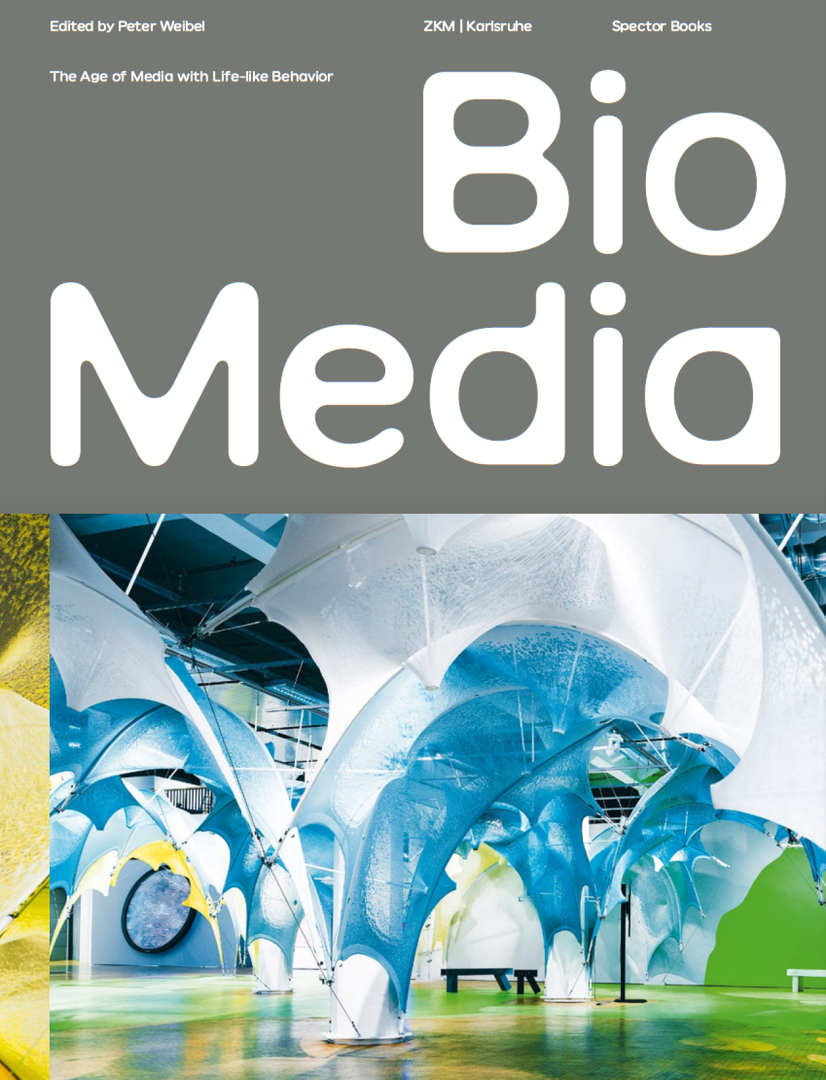
Ingeborg Reichle, "Living Technologies: Searching for Possibilities of Becoming." In: BioMedia: The Age of Media with Life-like Behavior. Exhibition catalogue, 2023, ed. by Peter Weibel and ZKM, pp. 32-37.
To understand intersections between advances in modern technology and our societies, the ZKM exhibition BioMedia. The Age of Media with Life- like Behavior investigates various artistic and scientific responses to new ways of cohabitation for organic life and “living” technologies, revealing possibilities of becoming. Exhibiting state-of-the-art scientific research about technological systems that demonstrate characteristics of life-like behavior as well as a major body of responsive artworks, BioMedia invites its audiences to learn about living systems, both natural and artificial, and shares experiences with genetic algorithms simulating life or navigating artificial agents and autonomously interacting robots in a more-than-human world.
Making technology come alive has inspired human imagination since ancient times, but with the emergence of 21st century technologies, this seems to be becoming a reality. With their perspective, the exhibition curators provide a deeper understanding about the complex and multilayered ways our societies will adapt to a more balanced coexistence with emerging “living” technologies, because technology is one of the major driving factors constituting social structures. Due to humanity’s co-evolution with technology, societies have grown excessively dependent on technology and its advances, while at the same time taking the potentially devastating side effects and systemic risks into account.
The Artwork as a Living System
Ingeborg Reichle
Ingeborg Reichle, "The Artwork as a Living System." In: Christa Sommerer & Laurent Mignonneau: The Artwork as a Living System, ed. by Karin Ohlenschläger, Peter Weibel, and Alfred Weidinger. The MIT Press, Boston, 2022, pp. 326-335.
Over the last three decades, the Austrian-French artist duo Christa Sommerer and Laurent Mignonneau have created many iconic artworks, which are recognized today as highly significant contributions to the history of interactive computer arts (ICA). With their interactive installations they have developed the concept of “Art as a Living System,” which they define as “a complex interrelation and interaction of real and virtual entities that engage in a dialogue, which causes and gives rise to the appearance of a different space of matter and mind.” Exploring real time human-computer interaction based on the design of emotional and metaphoric interface technologies that enhance the active engagement of their audiences with the virtual worlds of their computer-based artworks became a major incentive for their interactive art research.
Ingeborg Reichle, "Les technologies vivantes: à la recherche de perspectives de vie future." In: BioMedia. L’ère des médias semblables à la vie. Exhibition catalogue, ed. by ZKM and CDA (Centre des Arts) Enghien-les-Bains. Les presses du réel, Dijon, 2022, pp. 11-16.
Reflexiones de Charles Darwin sobre el origen del hombre y la utilidad de las visiones de mundo para la conservación de la especie
Ingeborg Reichle
Ingeborg Reichle, "Reflexiones de Charles Darwin sobre el origen del hombre y la utilidad de las visiones de mundo para la conservación de la especie." In: Encuentros de animales, ed. by María Antonia González Valerio. Universidad Nacional Autónoma de México, Mexico City, 2021, pp. 71-96.
Plasic Ocean: Art and Science Responses to Marine Pollution
Ingeborg Reichle
Plastic Ocean: Art and Science Responses to Plastic Pollution. Berlin: De Gruyter, 2021. Edited by Ingeborg Reichle.
Our oceans are facing an ecological crisis due to their contamination with millions of tons of toxic microplastic particles: within just a few years, the volume of microplastic particles will surpass that of plankton in our seas, transforming them into a vast sea of plastic.
This publication brings together numerous international art projects situated at the intersection of environmental activism, DIY biotechnology, and science, drawing attention to the irreversible consequences of destroying our marine ecosystems—such as the current threat posed by the loss of marine biodiversity or the decline in oxygen production resulting from massive plankton loss. Furthermore, it presents the latest scientific findings regarding sustainable alternatives to plastic.
With contributions by Dianna Cohen, Jennifer Wagner-Lawlor, Regine Rapp, Christian de Lutz, Mary Maggic, Robertina Šebjanic, Brandon Ballengée, Victoria Vesna, Martina R. Fröschl, Alfred Vendl, Reiner Maria Matysik, Ingeborg Reichle, Thomas Schwaha, Stephan Handschuh, María Antonia González Valerio, Rosaura Martínez Ruiz, Pinar Yoldas, and Michael Sauer.
Kunst & Natur = Bioart
Ingeborg Reichle
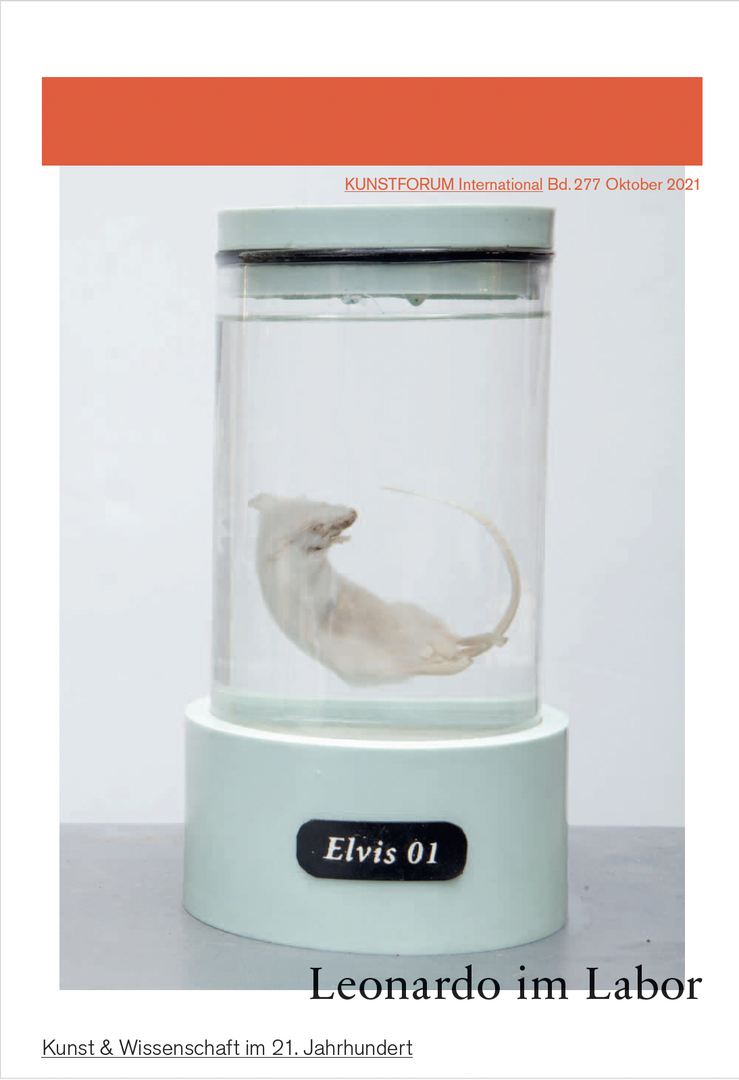
Ingeborg Reichle, "Kunst & Natur = Bioart. Ingeborg Reichle im Gespräch mit Sabine B. Vogel. In: Kunstforum International, Leonardo im Labor: Kunst & Wissenschaft im 21. Jahrhundert, ed. by Sabine B. Vogel, no. 277, 2021, pp. 133-140.
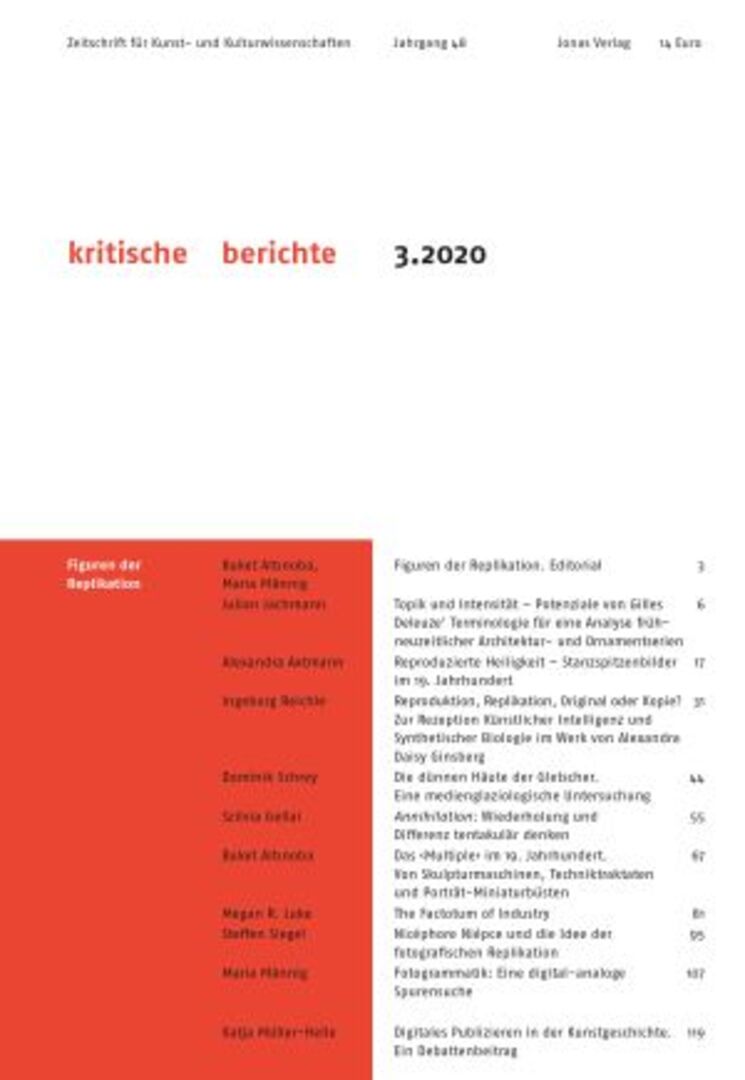
Ingeborg Reichle, "Reproduktion, Replikation, Original oder Kopie? Zur Rezeption Synthetischer Biologie und Künstlicher Intelligenz im Werk von Alexandra Daisy Ginsberg." In: kritische berichte, Figuren der Replikation, 2020, no. 3, ed. by Buket Altinoba, Maria Männig, pp. 31-43.
Die Krisenhaftigkeit der Gegenwart veranlasst Designer*innen und Künstler*innen heute gleichermaßen dazu, spekulative Zukunftsszenarien zu entwerfen, um unsere Aufmerksamkeit auf aktuelle globale Herausforderungen zu lenken, wie etwa den Klimawandel oder den Kollaps ganzer Ökosysteme in der Folge des Artensterbens. Die zeitgenössische Designpraktik des Critical Design und insbesondere dessen Sonderformen, wie des Speculative oder Discursive Design, zielen auf eine Erweiterung des tradierten Designbegriffs, um mit Hilfe von nichtfunktionalen Objekten oder kritischen Interventionen neue Perspektiven und innovative Denkweisen zu induzieren und somit neue Formen der Gesellschaftskritik zu artikulieren. Design wird in dieser Perspektive zu einem Katalysator gesellschaftlicher Transformationsbewegungen und evolviert zu einem kritischen Medium, das Fragen nach den gesellschaftlichen, ökonomischen und ökologischen Folgen der massenhaften Anwendung neuer Technologie- und Wissenschaftsfelder der Technosciences lokalisiert: Eben dies intendiert die britische Designerin Alexandra Daisy Ginsberg mit ihren kritischen und zugleich spekulativen Kunstprojekten und Designentwürfen.
Um Aufmerksamkeit für den gegenwärtigen Verlust der Artenvielfalt von epischem Ausmaß zu schaffen, knüpft sie an aktuelle wissenschaftliche Forschungen und neueste Technologieentwicklungen an.2 Für die Realisierung ihrer Projekte verwendet sie sowohl Methoden der Synthetischen Biologie sowie der Künstlichen Intelligenz (KI) als auch unterschiedliche ästhetische Strategien. Ihr Ziel ist es, den nahenden Kollaps unserer Ökosysteme exemplarisch visuell, auditiv oder olfaktorisch erfahrbar zu machen. Dafür kooperiert Ginsberg mit interdisziplinären Teams aus hochspezialisierten Forschungsinstitutionen oder mit innovativen Start-ups der Tech-Branche. Konfrontiert mit dem großen Artensterben einerseits und fasziniert von bis vor kurzem kaum für möglich gehaltenen wissenschaftlichen Entdeckungen und technischen Errungenschaften andererseits, manifestiert sich in ihren Arbeiten ein unauflösliches Dilemma: die Mitverantwortung der technologiegetriebenen Wissensentwicklung für das Vorantreiben der Klimakrise mit all ihren Folgeerscheinungen wie etwa der Kollaps unserer Ökosysteme. Die Entwicklungen in Wissenschaft und Technologie hält allerdings womöglich auch Lösungsansätze bereit, um die gegenwärtige katastrophale Situation umzukehren.
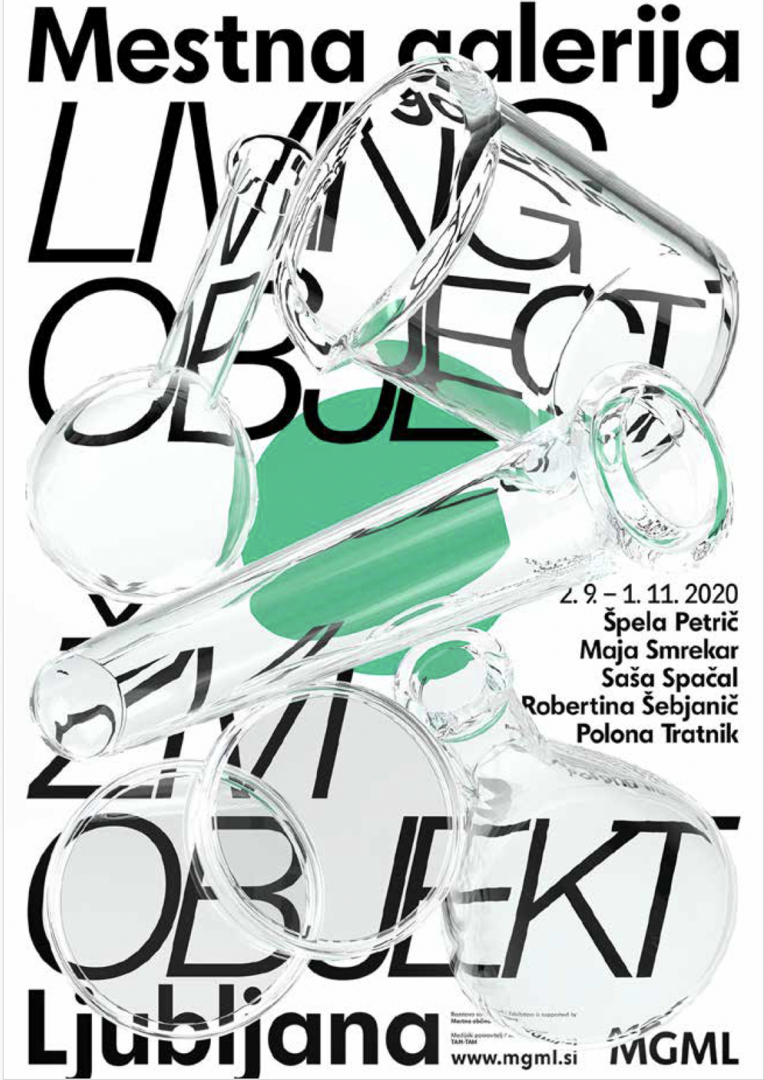
Ingeborg Reichle, "BioArt: From the Culture of the Laboratory to Critical Design Approaches.” In: Live Object. Exhibition catalogue, ed. by City Art Gallery, Ljubljana, 2020, pp. 34-41.
With the rise of BioArt, biotechnology became part of the art world. From the very beginning art that came out of the laboratory provoked a vital debate about the ethics and consequences of turning biology into technology. When BioArt began to appear in galleries and museum contexts in the late 1980s, putting on display synthetic DNA or genetically modified organisms, it became obvious that biotechnology had already crossed the divide between the artificial and the natural way back in the 1970s, without being noticed by the public. However, the science community was well aware of both the opportunities and dramatic risks that came along with the ability to manipulate and recombine DNA: the development of recombinant DNA technology fundamentally changed the way in which molecular structures and processes of living organisms became available for scientific experimentation, which made discussion of potential biohazards and guidelines for the application and safety regulations of biotechnology imperative and indispensable.
By bringing cutting edge technologies closer to the general public, from the outset BioArt raised important questions about the aesthetic and ethical status of modifying DNA and proteins to redesign the capabilities of living cells, plants, and animals into something useful for humans. Rewriting the blueprints of life for artistic purposes provoked passionate debates about the shifting concept of “life” — a concept that has changed dramatically since the arrival of biotechnology during the 20th century within the framework of the emerging technosciences. The non-normative use of biotechnological tools within the realm of the fine arts opened up new perspectives on life and its limits as well as framed controversies about the growing influence of science and technology on the fine arts and our societies at large. If art was able to alter and recreate “nature,” and found ways to design living entities for aesthetic purposes in the same way as art had done for millennia using traditional media, like marble, gold, or wood, then everyone would soon be able to do this as well: remapping the landscape of everyday life in terms of biotechnological mediation and applications.
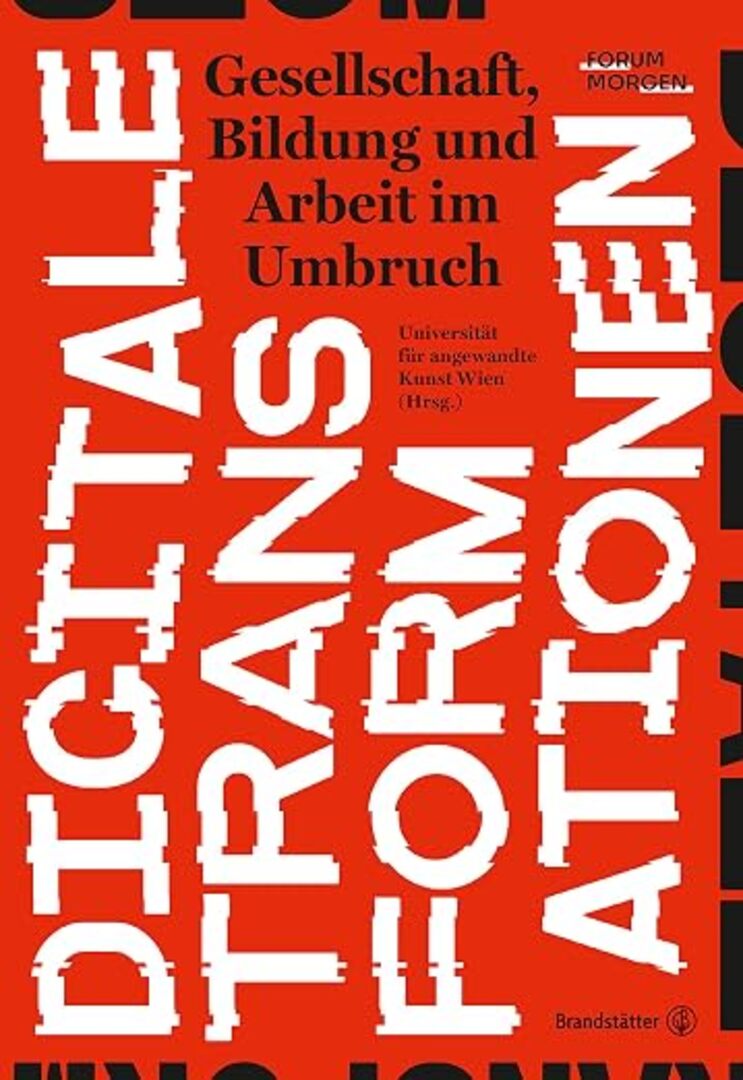
Ingeborg Reichle, "Teaching for the Future: Anforderungen an eine Hochschulbildung der Zukunft." In: Gerald Bast (ed.), Digitale Transformationen - Gesellschaft, Bildung und Arbeit im Umbruch. Christian Brandstätter Verlag, Vienna, Munich, 2018, pp. 207-220.
„Technological change is exponential, contrary to the commonsense ‚intuitive linear‘ view. So we won’t experience 100 years of progress in the 21st century — it will be more like 20,000 years of progress.“ Ray Kurzweil
In Zukunft wird lebenslanges Lernen eine zentrale Rolle spielen – gerade vor dem Hintergrund des digitalen Wandels, der zugleich ein gesellschaftlicher Wandel ist. Mit der Digitalisierung und der zunehmenden Automatisierung verändern sich die Arbeitswelt und unsere Art zu leben. Die Arbeitswelt von morgen wird von vernetzten digitalen Technologien und Automatisierungsprozessen bestimmt sein, die Routinetätigkeiten in den Hintergrund treten lassen und zur Marginalisierung einer Vielzahl von Berufsfeldern führen werden.
Durch diese Entwicklung werden bestehende menschliche Tätigkeiten einem grundlegenden Wandel unterzogen, da Technik nicht mehr nur, wie es in der Vergangenheit der Fall war, manuelle Arbeit übernimmt, sondern auch analytisch-intellektuelle Aufgaben ausführen kann. Dieser Wandel wird neue Tätigkeiten für Menschen eröffnen, diese werden jedoch stets in eine technologische Rahmung eingespannt sein. Dass menschliche Tätigkeiten in der Zukunft in verstärktem Maße digitale Unterstützung und Komplementierung erfahren werden, wird zu einer Erhöhung der Komplexität und des Anforderungsniveaus der Aufgabenbereiche führen, deren Bewältigung eine zunehmende Akademisierung und Verwissenschaftlichung der Ausbildung zur Voraussetzung haben und das Vertrautsein mit (digitalen) Technologien unabdingbar machen wird. Obwohl der Verlauf zukünftiger technologischer wie auch gesellschaftlicher Entwicklungen kaum absehbar ist, ist die gegenwärtige Ausrichtung der Hochschulbildung bereits heute vor die Herausforderung gestellt, dass Absolventen immer weniger auf definierte Tätigkeiten vorbereitet werden können und neue Berufsfelder häufig an den Schnittstellen der Disziplinen entstehen. Die Aneignung disziplinenübergreifender Kompetenzen wie auch die Fähigkeit, sich neues Wissen auf Feldern zu erschließen, in welchen man nicht ausgebildet wurde, wird an Bedeutung gewinnen, da sich die Aufgabenbereiche und Anforderungsprofile der Arbeitswelt in immer rascher aufeinander folgenden Zyklen verändern und immer wieder neu ausrichten werden. Die Anforderungen an eine disziplinenübergreifende Hochschulbildung stehen jedoch konträr zu den sozialen und administrativen Konturen moderner wissenschaftlicher Disziplinen und deren Teilsysteme, die einen hohe Spezialisierungsgrad aufweisen.
Disziplinen haben sich als effiziente Systeme der Produktion und der Verbreitung wissenschaftlichen Wissens in den vergangenen zwei Jahrhunderten etabliert und sind strukturbildend für Hochschulsysteme, insbesondere für den Lehrbetrieb, der Studierende auf deren Berufsfähigkeit in bereits bestehenden Berufsfeldern vorbereitet. Die Ausdifferenzierung und Spezialisierung des heutigen überwiegend disziplinär organisierten Hochschulsystems wurde nach dem Zweiten Weltkrieg durch die Einführung und Etablierung eines Systems kompetitiver Forschungsmittelvergabe noch weiter befördert und damit wurden die Grenzverläufe zwischen den Wissensgebieten zementiert. Formen disziplinärer Spezialisierung wie auch die erfolgreiche Institutionalisierung von Disziplinen basieren jedoch nicht nur auf Forschungsgegenstand und Methode, sondern beruhen auch auf der Schaffung einer kollektiven Identität in Abgrenzung zu anderen Disziplinen (Gründungserzählungen und gemeinsames Gedächtnis) sowie der Sicherstellung einer sozialen Identität, die sich in Instituten, Studiengängen, Publikationsorganen oder Fachgesellschaften ausbildet und in der disziplinären Basisstruktur des Studiums ihren Anfang nimmt.
Bio-Art: Die Kunst für das 21. Jahrhundert
Ingeborg Reichle
Ingeborg Reichle, "Bio-Art: Die Kunst für das 21. Jahrhundert." In: Kunstforum International, Kunstnatur | Naturkunst. Natur in der Kunst nach dem Ende der Natur, ed. by Judith Weiss, no. 257, 2018, pp. 44-53.
Mit der Entstehung der Bio-Art sind die Ausdrucksmittel der Künste reicher geworden, den traditionellen Ausdrucksmitteln sind neue biologische Medien an die Seite getreten, deren Spektrum von transgenen Organismen bis hin zu synthetischer DNA reicht. Biotechnologische Methoden und Verfahren zur Manipulation und Rekombination des genetischen Codes auf molekularer Ebene faszinieren von Beginn an Wissenschaftler und Künstler gleichermaßen. Die Aussicht, neuartige Lebewesen im Labor herzustellen, veranlasst zu Beginn der 1980er-Jahre zahlreiche Künstler sich diesem neuen Zweig der Technowissenschaften zuzuwenden. Dabei gilt es, zukünftige Szenarien des Lebendigen auszuloten, in welchen die biologische Vielfalt nicht mehr nur durch die Mechanismen der Evolution entsteht, sondern gezielt durch Menschenhand. Das Rekombinieren von Genen über Artgrenzen hinweg und damit die Herstellung sogenannter transgener Organismen führt zu einer umfassenden Neubewertung des Verhältnisses von Kunst, Technik und Natur und wird zum Resonanzboden der Bio-Art.
Den Ausdruck Bio-Art führt im deutschsprachigen Kontext der österreichische Künstler und Medientheoretiker Peter Weibel mit seinem Aufsatz „Biotechnologie und Kunst“ im Jahr 1981 ein. Hier wird erstmals auf die Verwendung biologischer Systeme als künstlerische Ausdrucksmittel verwiesen – im Sinne einer neuen Kunstrichtung, die Weibel als Bio-Art bzw. biotechnische Kunst bezeichnet. Mit den Anfängen, artifizielle biologische Systeme als künstlerische Medien in die Kunst zu integrieren, beginnt zugleich eine scharf geführte Kontroverse darüber, ob unter dem Ausdruck „Bio-Art“ jede Form von künstlerischer Auseinandersetzung mit biotechnologischen Verfahren und deren gesellschaftlichen Konsequenzen zu subsumieren sei, oder einzig und allein jene Kunstäußerungen, die buchstäblich mit dem Einsatz von Biomedien hands-on im Labor entstehen.
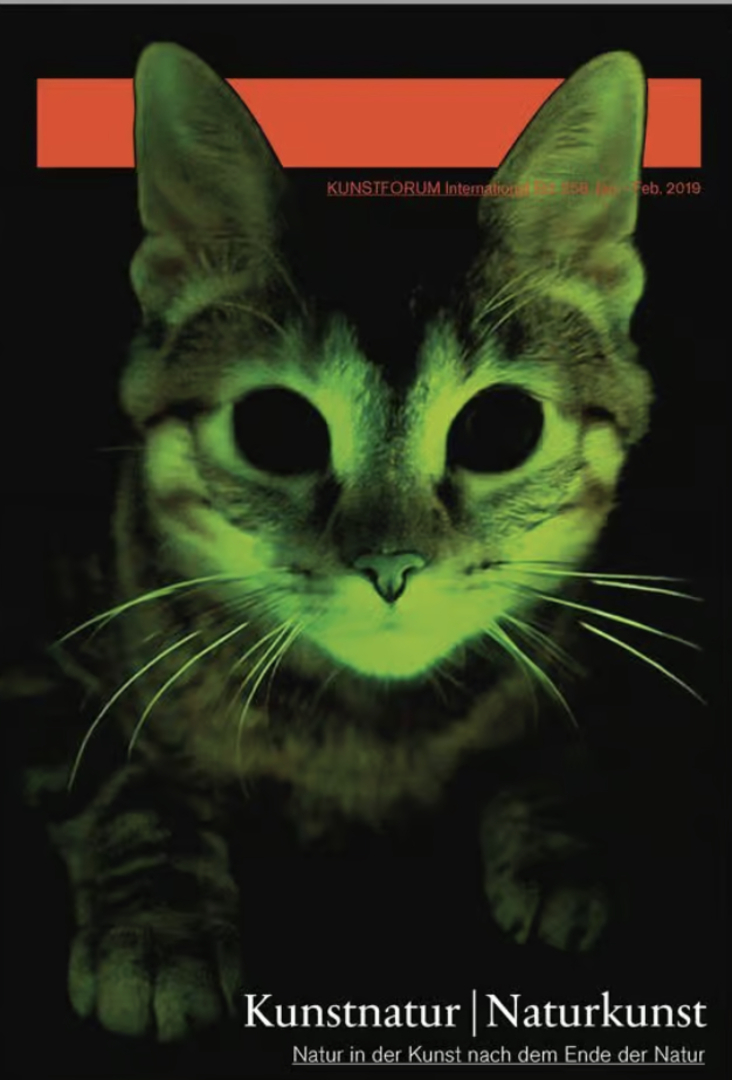
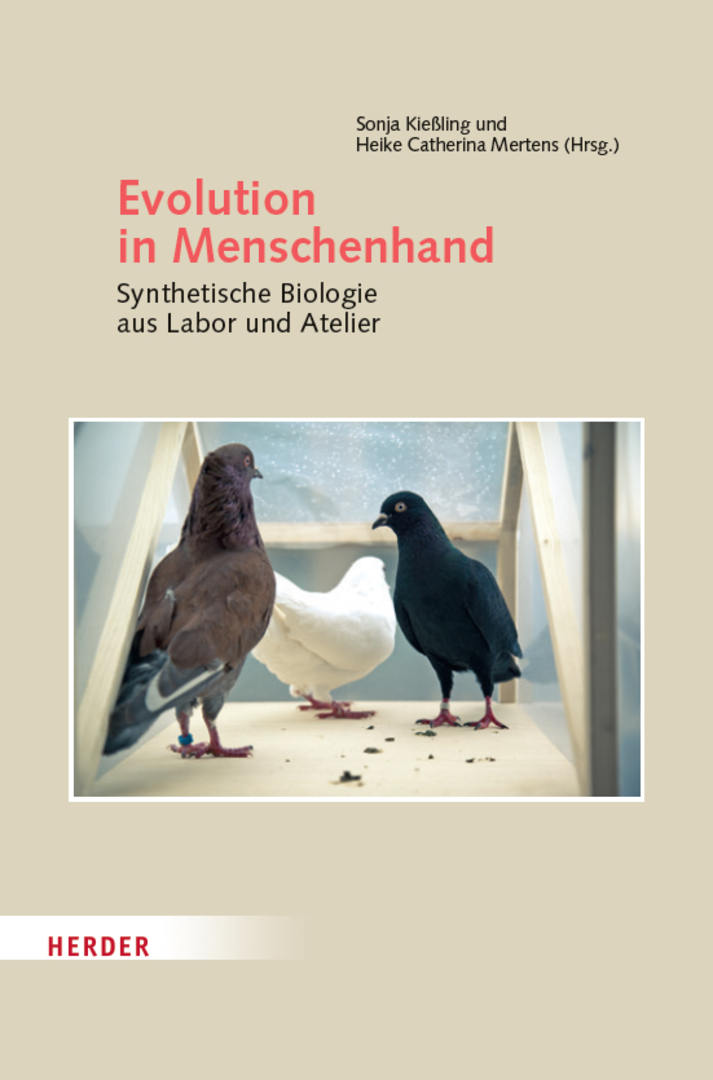
Ingeborg Reichle, "Synthetische Biologie und biologisches Design in Kunst und Wissenschaft." In: Sonja Kießling and Heike Catherina Mertens (eds.), Evolution in Menschenhand? Synthetische Biologie aus Labor und Atelier. Herder Verlag, Freiburg i. Br., 2016, pp. 77-92.
Mit der Synthetischen Biologie ist in den letzten Jahren ein neuer Forschungs- und Anwendungsbereich der Technosciences entstanden, der Leben zwar (noch) nicht künstlich erzeugen kann, die Technisierung des Lebendigen jedoch in einem bislang ungekannten Maße forciert hat. Die Manipulation von Organismen auf molekularer Ebene, die in den frühen 1970er Jahren durch die Gentechnik möglich wurde, wird gegenwärtig durch die Synthetische Biologie in gezielte Konstruktionsprozesse neuartiger Organismen überführt, die in der Natur so bislang nicht existieren. Dafür führt die Synthetische Biologie ein weites Spektrum naturwissenschaftlicher Disziplinen zusammen und überträgt ingenieurwissenschaftliche Paradigmen auf das Gebiet der Biologie.
Verfolgte die klassische Biologie stets die Absicht, ein grundlegendes Verständnis von der Vielfalt und der Komplexität der durch evolutionäre Prozesse entstandenen Natur zu entwickeln, zielt die Synthetische Biologie vielmehr darauf, die Komplexität lebender Systeme zu reduzieren und lebensfähige Systeme mit minimal notwendigen Komponenten bottom-up zu entwerfen und Molekül für Molekül zu konstruieren und damit Einsichten in den Ursprung des Lebens zu eröffnen. Ein weiteres Ziel der Synthetischen Biologie ist die Herstellung von Mikroorganismen für einen ganz bestimmten Zweck. Mithilfe von standardisierten DNA-Bausteinen, sogenannten BioBricks, lassen sich über ein modulares Baukastensystem Organismen zielgerichtet planen und konstruieren, die über ein klar definiertes Spektrum an Fähigkeiten und Eigenschaften verfügen. Diese Herstellungsprogrammatik versteht lebendige Organismen als komplexe chemische Maschinen und macht aus Lebendigem ein technisches Produkt. Das zweckbestimmte Entwerfen und Herstellen von Organismen nach Maß, im Sinne eines rationalen Designs, wird von den Verfechtern der Synthetischen Biologie mit einer großen Erzählung verknüpft, die Lösungen für die Herausforderungen der Menschheit im 21. Jahrhundert verspricht, wie die Energiefrage, die Ernährung der wachsenden Weltbevölkerung und insbesondere die Umweltverschmutzung als Kehrseite der Industrialisierung und eines zügellosen Massenkonsums. Diese Vision einer nachhaltigen und damit besseren Zukunft für alle Bewohner dieser Erde strahlt fraglos eine große Faszination aus.
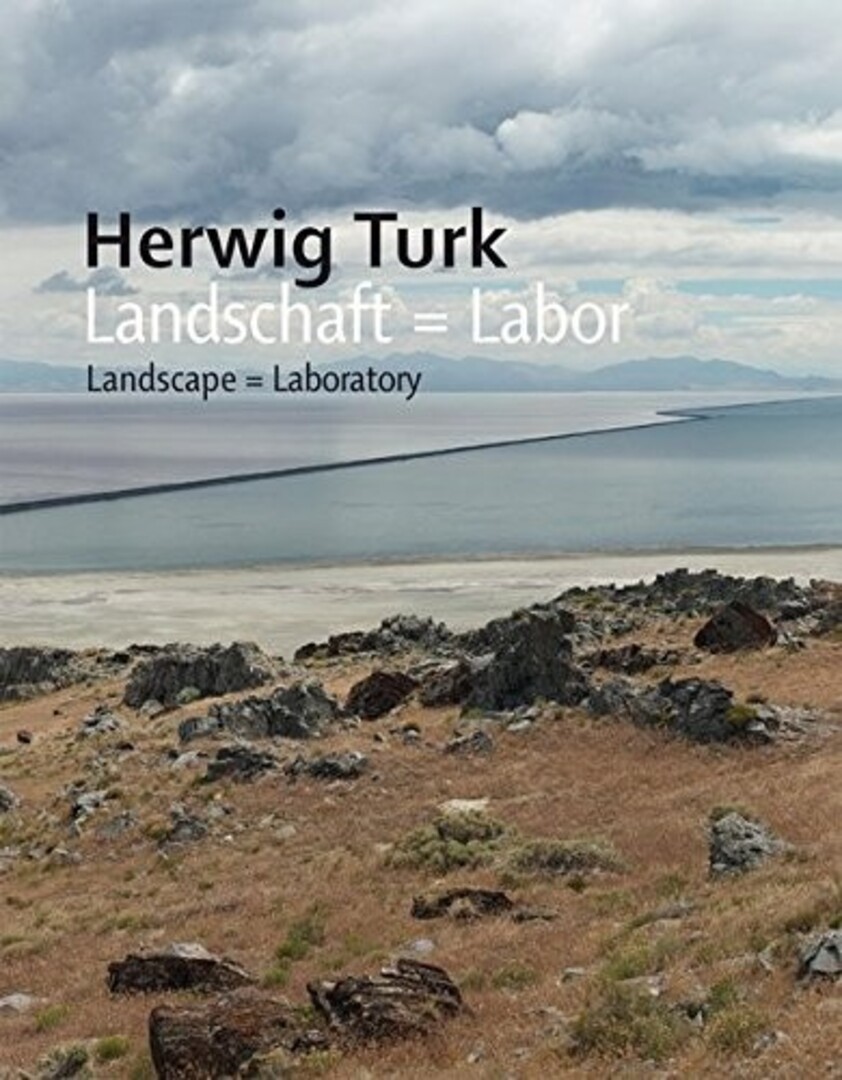
Ingeborg Reichle, "Strategies of visibility and visualisation in works by Herwig Turk." In: Herwig Turk. Landschaft = Labor. Exhibition catalogue, ed. by Museum Moderner Kunst Kärnten, 2016, pp. 46-48.
Motiviert durch die Auseinandersetzung mit visuellen Strategien digitaler Kunst stößt Herwig Turk bei seinen Recherchen zu seiner Bildserie superorgans (1993) eher beiläufig auf die neuen Bildwelten der Medizin und der Naturwissenschaften, die zu dieser Zeit bereits geprägt sind durch den Einsatz digitaler Bilder und bildgebender Verfahren. Fasziniert von der Kluft und den Widersprüchen zwischen damals höchst virulenten medientheoretischen Debatten über den epistemologischen Status digitaler Bilder auf der einen Seite und deren umfassenden Einsatz in medizinischen und wissenschaftlichen Kontexten auf der anderen Seite, beginnt Herwig Turk sich mit instrumentellen Bildern auseinanderzusetzen, was ihn schließlich in die Laboratorien der Biowissenschaften führt. Seither lässt Herwig Turk seine Arbeiten immer wieder im Spannungsverhältnis von Kunst und Wissenschaft entstehen, wobei die Herstellung visueller Evidenz für ihn von besonderer Bedeutung ist.
Das Vertrautwerden mit der materiellen Kultur laborwissenschaftlicher Forschung führt alsbald zur Erweiterung seiner Perspektive, die sich nicht mehr nur auf die Medien und instrumentellen Bildwelten bezieht, sondern ganz grundsätzlich nach der Herstellung wissenschaftlicher Tatsachen fragt, beeinflusst auch durch die Lektüre von Ludwik Flecks Entstehung und Entwicklung einer wissenschaftlichen Tatsache, einem Klassiker der modernen Wissenschaftsforschung. In der Folge entstehen in Zusammenarbeit mit Wissenschaftlern, wie dem portugiesischen Zellbiologen Paulo Pereira von der Universität Coimbra, Arbeiten wie referenceless photography (1998–2003) und agglomeration (2003), agents (2007) oder labscapes (2007), die die symbolischen und medialen Praktiken der Herstellung von Wissen im laborwissenschaftlichen Kontext in den Blick nehmen und den Topos der Referenzlosigkeit digitaler Bilder bzw. bildgebender Systeme ausloten. Heute basiert die Mehrzahl der Bilder in der Medizin und in den Wissenschaften nicht mehr auf abbildenden, sondern auf bildgebenden Verfahren, wodurch das indexikalische Band zwischen Bild und Referenzobjekt gelockert wird. Herwig Turk macht sich in seinen Arbeiten zunutze, dass visuelle Medien stets durch Evidenzeffekte gekennzeichnet sind und deren bildliche Intensität eng mit ihrer medialen Form des Zeigens verbunden ist. Zudem macht er deutlich, dass wissenschaftliche Bilder nicht nur die ihnen zugewiesenen Inhalte referieren, sondern dass ihre Strategien der Sichtbarmachung das Sichtbargemachte immer zugleich auch transformieren, verändern und in ihre jeweils eigene visuelle Logik einbinden. In den unterschiedlichen Wissensbereichen kommen höchst differente Darstellungsweisen zum Einsatz und eine Vielzahl an visuellen Medien, die ihrer eigenen Logik folgen und auf ihre Weise Bedeutung schaffen und stabilisieren.
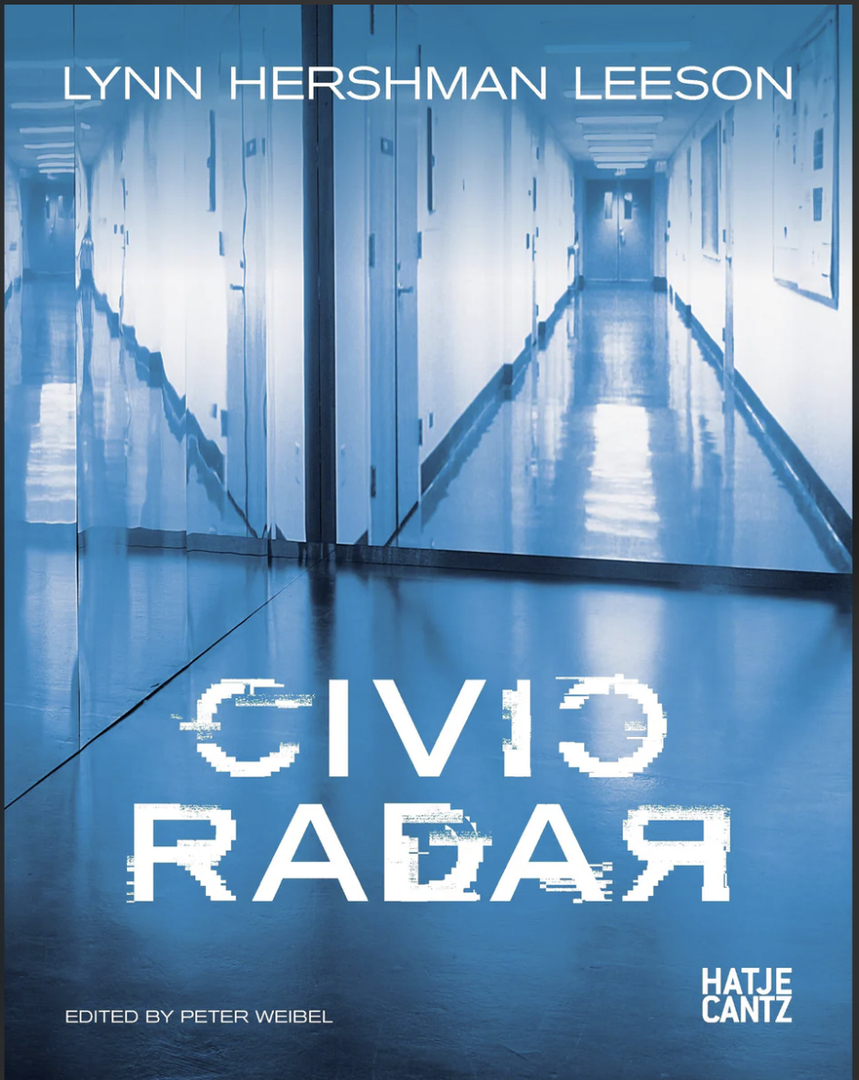
The Infinity Engine
Ingeborg Reichle
Ingeborg Reichle, "The Infinity Engine." In: Peter Weibel (ed.), Lynn Hershman Leeson. Civic Radar. Exhibitionncatalogue, Hatje Cantz, Ostfildern, 2016, pp. 328-333.
Die Entdeckung prähistorischer Kunst und ‚Buschmannmalereien‘ vor dem Ersten Weltkrieg
Ingeborg Reichle
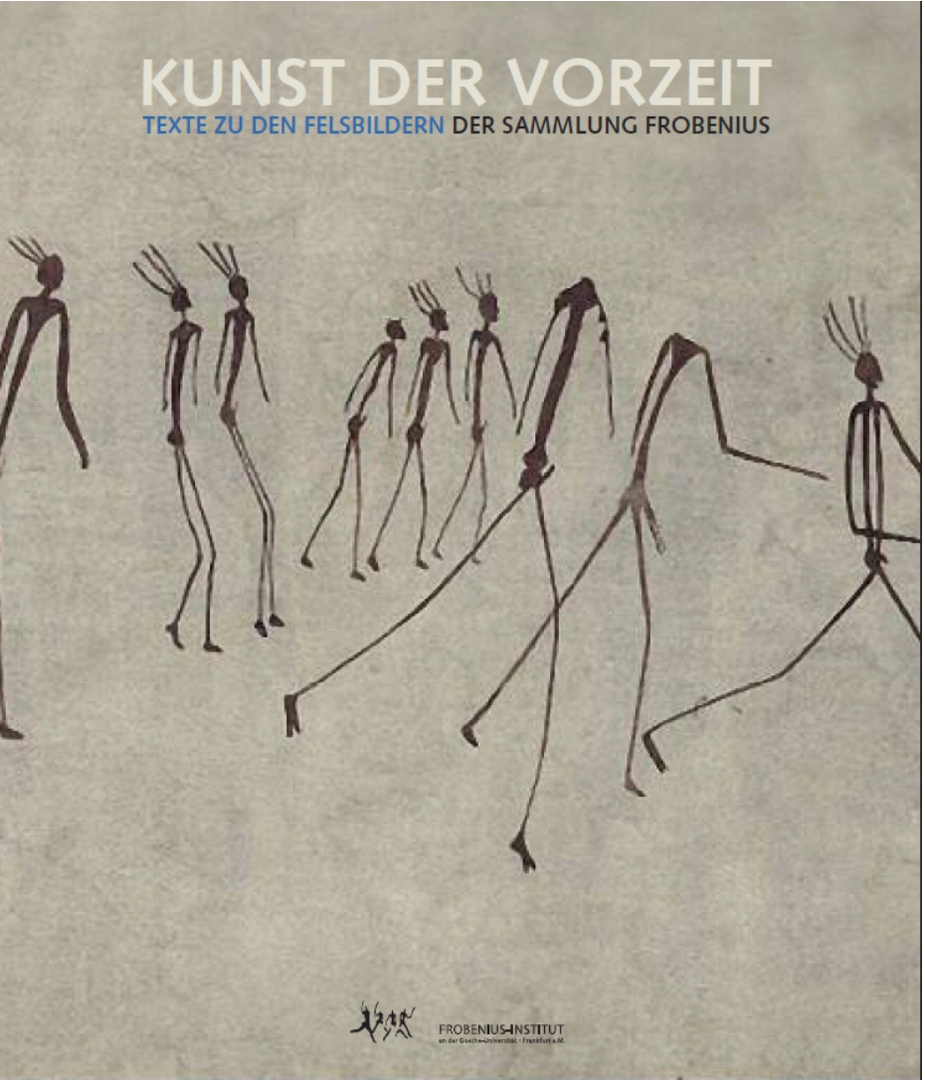
Ingeborg Reichle, "Die Entdeckung prähistorischer Kunst und ‚Buschmannmalereien‘ vor dem Ersten Weltkrieg." In: Karl-Heinz Kohl (ed.), Felsbilder: Archaische Kunst in der Moderne. Die Sammlung Leo Frobenius. Prestel Verlag, Munich, 2016, pp. 23-32.
Als Leo Frobenius (1873–1938) im Jahr 1904 zu seiner ersten Expedition in das Innere Afrikas aufbrach, um dort Ethnien zu erforschen und Objekte für Museen zu sammeln, lag die Publikation des Aufsatzes La grotte d’Altamira, Espagne. Mea culpa d’un sceptique des französischen Prähistorikers Émile Cartailhac (1845–1921) nur zwei Jahre zurück. Dieser Aufsatz aus dem Jahr 1902 gilt heute allgemein als Wendepunkt in der westlichen Rezeption prähistorischer Kunst. Der Anerkennung der Echtheit der prähistorischen Malereien von Altamira durch eine Autorität wie Émile Cartailhac ging eine Jahrzehnte schwelende Auseinandersetzung über das Alter der Menschheit und die Kunst- und Bildfähigkeit der Menschen der Vorzeit voraus, die mit einer Reihe von Publikationen des französischen Amateurarchäologen Jacques Boucher de Perthes (1788–1868) ihren Anfang nahm.
Boucher de Perthes begann, angeregt durch die experimentelle Forschung zur Typologie früher Steinbearbeitungstechniken seines Freundes Casimir Picard (1806–1841), Arzt und Naturforscher in Abbeville, im unteren Sommetal nach Fossilien und prähistorischen Artefakten zu graben. In den frühen 1840er Jahren stieß er bei Grabungsarbeiten für den Somme-Kanal in einer tiefen Erdschicht, die zugleich auch Fossilien in dieser
Region längst ausgestorbener Tiere wie Elefanten und Rhinozerosse barg, auf von Menschenhand behauene Steine. Dies war ihm ein Beweis dafür, dass die Steinartefakte vor langer Zeit von Menschen hergestellt worden waren und diese rohen Artefakte eine Spur zu egen vermochten in die Zeit der Anfänge menschlicher Kunst- und Kulturfähigkeit, die nicht mehr in den Rahmen einzupassen war, den die Erzählung der Genesis für die Entstehung des Menschen vorgab.
Ein Blick in die Geschichte der Bildwelten der Weltbilder
Ingeborg Reichle
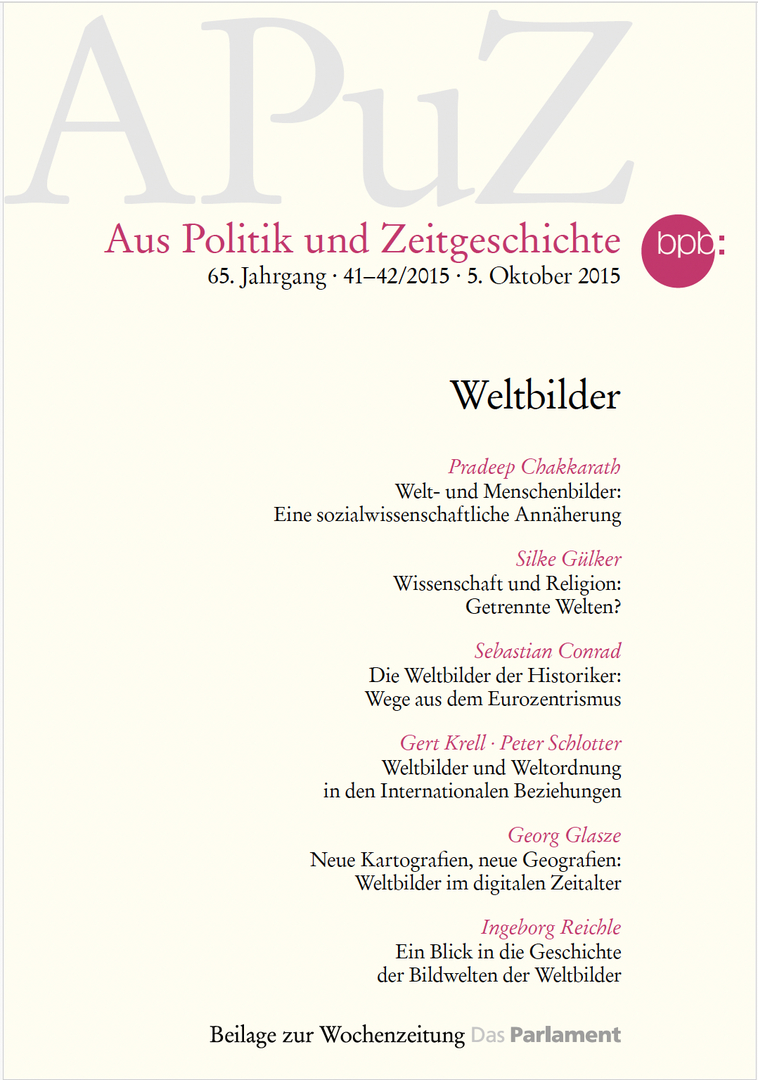
Ingeborg Reichle, "Ein Blick in die Geschichte der Bildwelten der Weltbilder." In: Aus Politik und Zeitgeschichte, „Weltbilder“, Bundeszentrale für politische Bildung, Bonn, 2015, pp. 37-46.
Forever and Always: Strategies of Artistic and Biological Adaptation in the “Plasticene” Age
Ingeborg Reichle
Ingeborg Reichle, "Forever and Always: Strategies of Artistic and Biological Adaptation in the “Plasticene” Age." In: Pinar Yoldas: An Ecosystem of Excess. Exhibition catalogue, Ernst Schering Foundation, ed. by Heike Catherina Mertens. Agrobooks, Berlin, 2014, pp. 20-35.
Since the beginning of the nineteenth century, the seemingly endless expanse of the ocean and ist never-ending play of light and clouds have made it a source of inspiration and a place of yearning for the arts. The sea is a central theme in the work of many artists, from Caspar David Friedrich to Gerhard Richter. The latter painted a series of large-scale seascapes (Seestücke) at the end of the 1960s. In these suggestive works, the sea and the wide-open sky are painted in the style of the Romantics. One of Richter’s paintings from 1969 was even made into a German 145-cent stamp in Germany in 2013.
The exhibition An Ecosystem of Excess, which shows works by the Turkish artist Pinar Yoldas, who lives in the US, also revolves around the sea. However, the ocean is more than a mere source of inspiration for Pinar Yoldas’s art—she focuses on what is actually going on in the oceans. Overfishing, pollution, acidification, and rising temperatures due to climate change are all factors that have been putting stress on marine ecologies for decades and still pose a serious threat today.
Speculative Biology in the practices of BioArt
Ingeborg Reichle
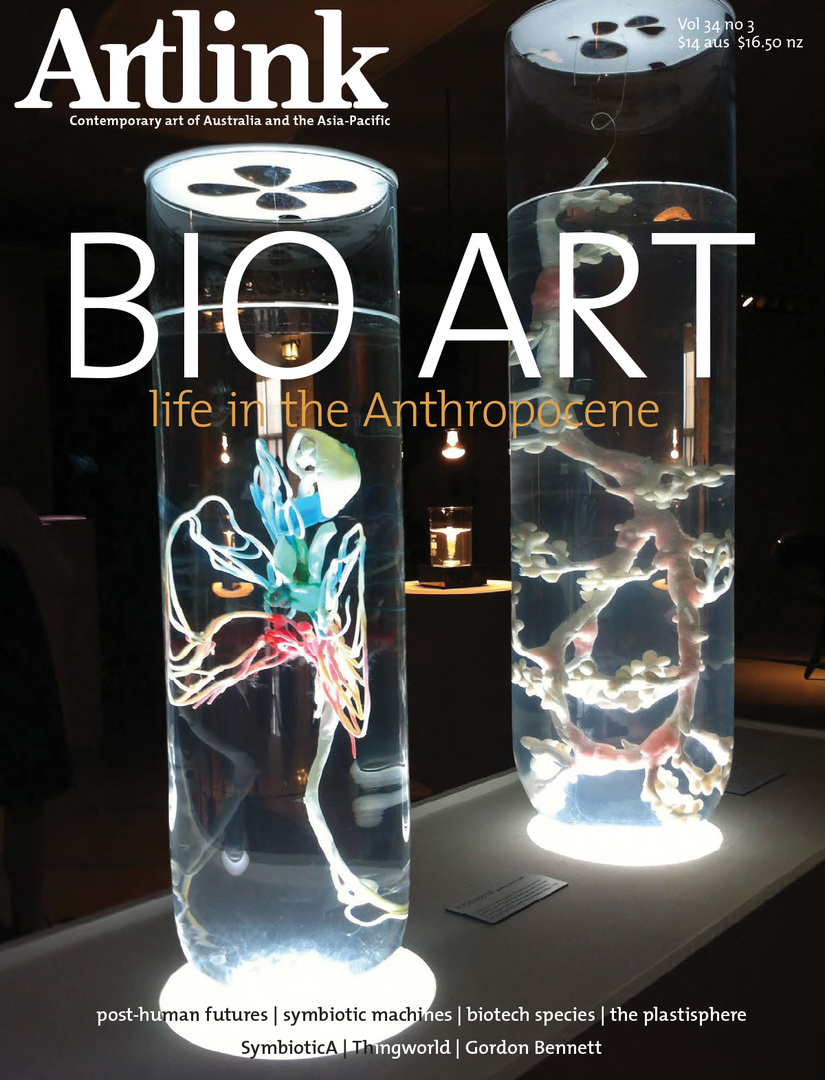
Ingeborg Reichle, "Speculative Biology in the practices of BioArt." In: Artlink. Contemporary Art of Australia and the Asia-Pacific: Bio Art: Life in the Antropocene, vol. 34, no. 3, 2014, pp. 30-34.
When BioArt received much attention around the turn of the millennium as a result of artworks like Eduardo Kac’s green rabbit, a transgenic animal that glowed in the dark under UV light, it unleashed a lively debate about whether biotechnology would become an artistic medium and whether the fine arts should engage with transgenic or cellular organisms. When BioArt pioneers like Joe Davis began to work with DNA in the late 1980s in projects such as Poetical Vaginal or Microvenus it was a major challenge to get access to scientific laboratories in an institutional context. Passing through the doors of institutions and getting access to a wet bench in a laboratory to go “hands-on” meant in those days a radical change of location. Moving from the studio into the laboratory provided the fine arts with a variety of new materials like bacteria, cells, tissue cultures, or transgenic organisms as a means of artistic expression, but this shift also made it necessary for artists to get acquainted with new epistemologies and the logic of the techno-scientific regime, which governs experimental bench work through protocols, techniques and methods, instruments and equipment, as well as a complex set of human and non-human agents and most notably with patents and the flow of global capital.
With the emergence of BioArt, biotechnology became part of the art world. By bringing cutting edge technologies closer to the public, BioArt has provoked wider reflection about the ethics of turning biology into technology and in particular has raised questions about the aesthetic and ethical status of manipulating living organisms. By showing transgenic organisms in galleries and museum contexts, BioArt drew attention to the fact, that biotechnology had already crossed the divide between the artificial and the natural back in the 1970s. Unsurprisingly, the selective manipulation of living organisms for artistic purposes provoked passionate debates about the shifting concept of life, a concept that has changed dramatically since the arrival of biotechnology within the frame of technoscience. Art emerging from the laboratory opened up non-normative debates about life and its limits in the crossover between BioArt, ethics, sciences, and the humanities, and also framed controversies about the growing influence of science and technology and a bioscience-based economy on our societies as well as on the fine arts.
Whereas in the early days BioArt primarily sought to reveal the state of the art of biotechnology or tissue engineering, current BioArt practices interrogate the limits, boundaries, frontiers, and frameworks within which life can exist and how fragile these limits are in an age that some have termed the Anthropocene. Altering nature deliberately using biotechnology – in a scientific laboratory or in the kitchen at home – is still a vital topic in BioArt. However, because we have transformed our entire planet in recent centuries into a kind of laboratory where traditional distinctions between natural and artificial, subject and object, human and non-human agents no longer hold when confronted by the enormous ecological problems and challenges that exist today, speculative biology is now becoming a major issue in BioArt.
Más allá de los humanos: bioarte y cultivo de tejidos
Ingeborg Reichle
Ingeborg Reichle, "Más allá de los humanos: bioarte y cultivo de tejidos." In: Maria Antonia Gonzalez Valerio (ed.), Sine Origin. Universidad Nacional Autónoma de México, Mexiko City, 2014, pp. 601-616.
Biodesign: Formfindungsprozesse in Natur, Architektur und Design
Ingeborg Reichle
Ingeborg Reichle, "Biodesign: Formfindungsprozesse in Natur, Architektur und Design." In: Stefan Aue, Günter Stock, Hermann Parzinger (eds.), ArteFakte. Wissen ist Kunst – Kunst ist Wissen. Transcript Verlag, Bielefeld, 2014, pp. 207-216.
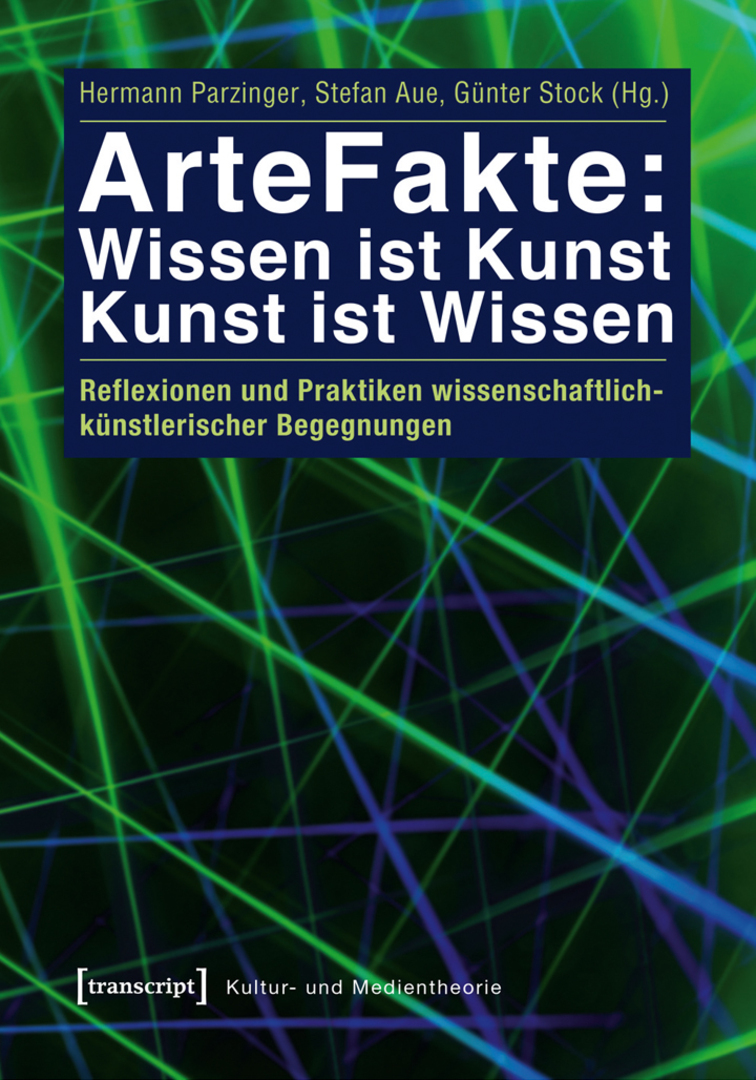
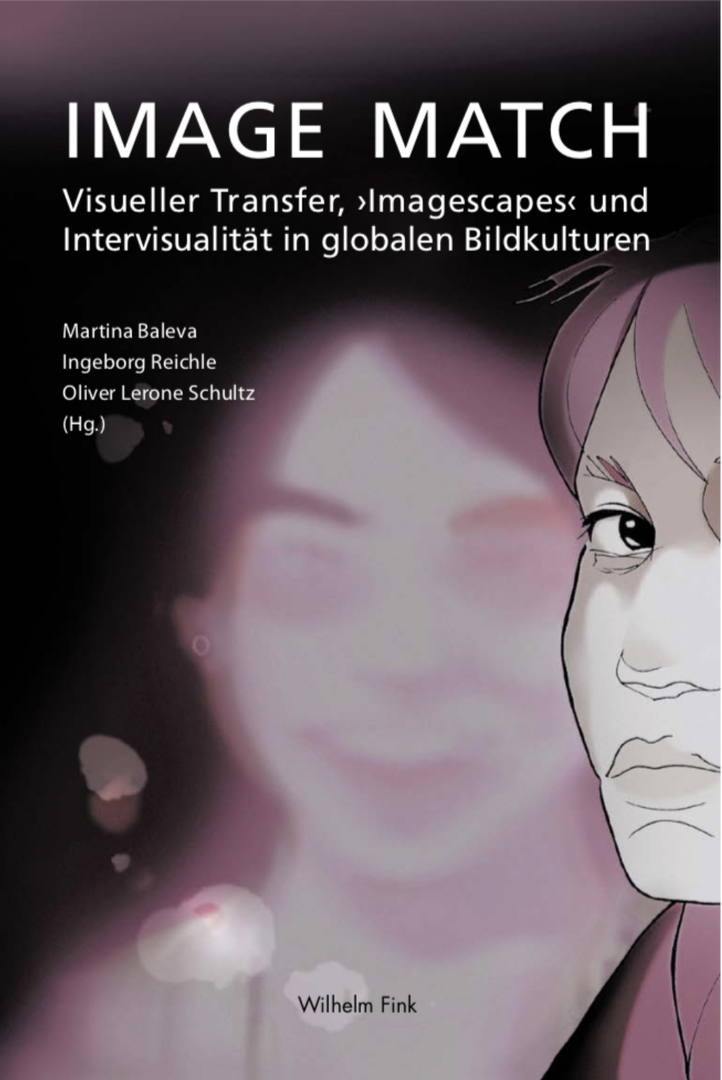
IMAGE MATCH: Visueller Transfer, „Imagescapes“ und Intervisualität in globalen Bildkulturen
Ingeborg Reichle, Martina Baleva, and Oliver Lerone Schultz
Martina Baleva, Ingeborg Reichle, Oliver Lerone Schultz (eds.), IMAGE MATCH: Visueller Transfer, „Imagescapes“ und Intervisualität in globalen Bildkulturen. Wilhelm Fink Verlag, Munich, 2012.
Im Zuge der Globalisierung geraten Bilder in massenhafter Weise in Bewegung. Sie sind Teil transnationaler Migration, fließen millionenfach durch das Internet und fusionieren zu neuen Bildlandschaften. Mit ihnen formen sich transkulturelle Bildensembles, in denen in vielfältigen ikonischen Begegnungen Referenzen und Bedeutungen neu verhandelt werden. Die Untersuchung von Übertragungen zwischen Bildräumen samt ihrer Interpretanten ermöglicht einen bildwissenschaftlichen Zugriff auf Intervisualität in globalen Bild-Kulturen. Einsichten in diese Übertragungsprozesse gewährt bereits ein Blick auf ›traditionelle‹ Bildkulturen und tradierte Bildmedien. Auch diese sind, wie sich nun unter dem Eindruck einer globalen Bild-Transfer-Kultur zeigt, oft auch nur durch solche visuellen und bildlichen Übertragungs- und Verhandlungsprozesse zu verstehen.
IMAGE MATCH beleuchtet die damit einhergehenden und neu entstehenden hybriden kulturellen Bildpraktiken sowie die historische Entwicklung und den Einfluss von Transferbewegungen auf etablierte Bildlandschaften und die ›Logik der Bilder‹.
Mit Beiträgen von Martina Baleva, Priyanka Basu, Jacob Birken, Patrizia Faccioli, Ulf Jensen, Il-Tschung Lim, Nicholas Mirzoeff, Gabriel S. Moses, Jörg Probst, Michaela Nicole Raß, Markus, Rautzenberg, Ingeborg Reichle, Oliver Lerone Schultz, Nicole E. Stöcklmayr, Anna Valentine Ullrich, und Friederike Weis.
Gazing Hands and Blind Spots: Strategies of Visual Transgression in Contemporary Art
Ingeborg Reichle
Ingeborg Reichle, "Gazing Hands and Blind Spots: Strategies of Visual Transgression in Contemporary Art."In: Ideas in History. Nordic Society for the History of Ideas, no.5.1, 2010/11, ed. by Max Liljefors and Victoria Höög, pp. 27-51.
Whereas media-theoretical debates impute the loss of referentiality to the epistemic status of digital imaging systems, medicaldoctors, scientists, and entire branches of commerce rely on these new image worlds to an ever-increasing extent. This contradiction is condensed by the artist Herwig Turk in his art projects into productive relationships of tension that are always accompanied by a certain discomfiture. Through strategies of transgression Turk tries ot trace the complex requirements for the production of evidence in modern medical and scientific practice, especially with regard to the difficulty of attributing reliability and socio technological evidence to the imaging systems that are tied to these highly important decisions. Given that the complex involved in the production of knowledge in the life sciences is highly intricate, it is hardly surprising that for many years now artists have been deeply interested in it. Turk implements a remarkable mode of access to the laboratory as a location for the production of scientific facts. Using diverse forms of artistic mise-en-scène of the material culture of the laboratory, Turk tries to understand the complex interaction of instruments, experimental praxis, and theory. He puts contemporary laboratory life under observation and attempts to make it visually tangible. For a long time scientific instrumentation did not receive much attention because science seemed to be mainly about ideas, and instruments were regarded only as tools for measuring and observing.
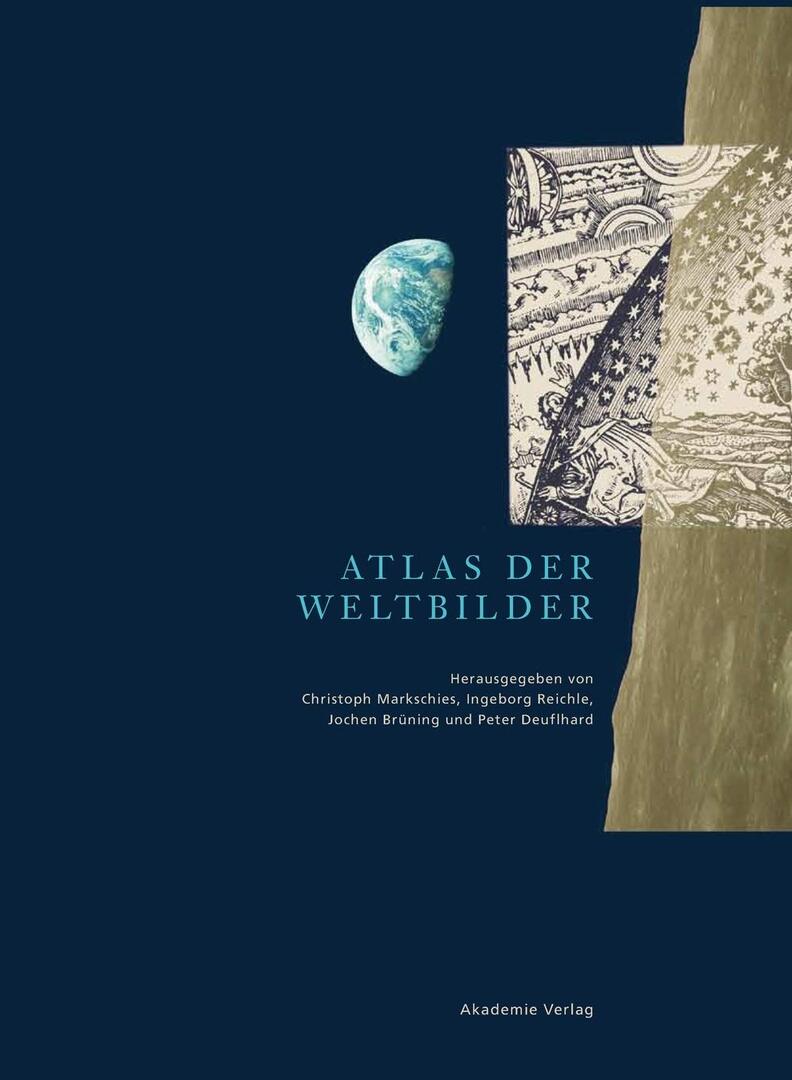
Atlas der Weltbilder
Christoph Markschies, Ingeborg Reichle, Jochen Brüning, Peter Deuflhard
Christoph Markschies, Ingeborg Reichle, Jochen Brüning and Peter Deuflhard (eds.), Atlas der Weltbilder. Akademie Verlag, Berlin, 2011.
Praktiken visueller Welterzeugung in Form von Weltbildern lassen sich bereits in der Antike beobachten und haben sich bis heute als Mittel zur Konstruktion von Ordnungsvorstellungen bewährt. Seit jeher steht der begrifflichen Ordnung der Welt eine modellhaft anschauliche Ordnung gegenüber. Die grundlegende Bedeutung, die Anschaulichkeit für unser Verständnis von der Welt spielt und die die vielfältigsten Weltbilder hervorgebracht hat, ist jedoch mehr als eine bloße Wiederholung des Sehens. Die Bildwelten der Weltbilder geben uns ein anschauliches Bild von der Welt und vom Kosmos und sind wirkungsmächtige Instrumente zum praktischen und theoretischen Handeln in der Welt, die auf unterschiedlichste Weise unsere Vorstellungen von der Welt entwerfen und unsere Weltanschauung formen.
Der reich bebilderte Atlas der Weltbilder ist das Ergebnis einer dreijährigen Forschungsarbeit der interdisziplinären Arbeitsgruppe »Die Welt als Bild« der Berlin-Brandenburgischen Akademie der Wissenschaften, die sich der Erforschung der Praktiken visueller Welterzeugung in Form von Bildern gewidmet hat. Die Publikation gibt Einsicht in ein breites Spektrum von Weltbildern und schreitet einen zeitlichen Rahmen ab, der mit altägyptischen Weltkonzeptionen beginnt und mit aktuellen Satellitenbildern von Google Earth endet. Dokumentiert werden somit Aspekte kulturgeschichtlicher Welterzeugung in Form von Weltbildern aus den zurückliegenden zweieinhalb Jahrtausenden.
Mit Beiträgen von: Aleida Assmann, Michael Borgolte, Horst Bredekamp, Olaf Breidbach, Jochen Brüning, Werner Busch, Karl Clausberg, Arne Effenberger, Frank Fehrenbach, Andreas Fritsch, Andreas Gormans, Friedhelm Hartenstein, Jörn Henrich, Eberhard Knobloch, Karl-Heinz Kohl, Sybille Krämer, Christoph Lüthy, Christoph Markschies, Herfried Münkler, Dominik Perler, Henrik Pfeiffer, Klaus Pinkau, Ingeborg Reichle, Bruno Reudenbach, Wilhelm Schmidt-Biggemann, Ute Schneider, Richard Schröder, Eva Schürmann, Erwin Sedlmayr, Kurt-Victor Selge, Hans Gerhard Senger, Steffen Siegel, Walter Sperling, Reinhart Staats, Alfred Stückelberger, Michael Weichenhan, Petra Weigel, Isabel Wünsche und Johannes Zachhuber.
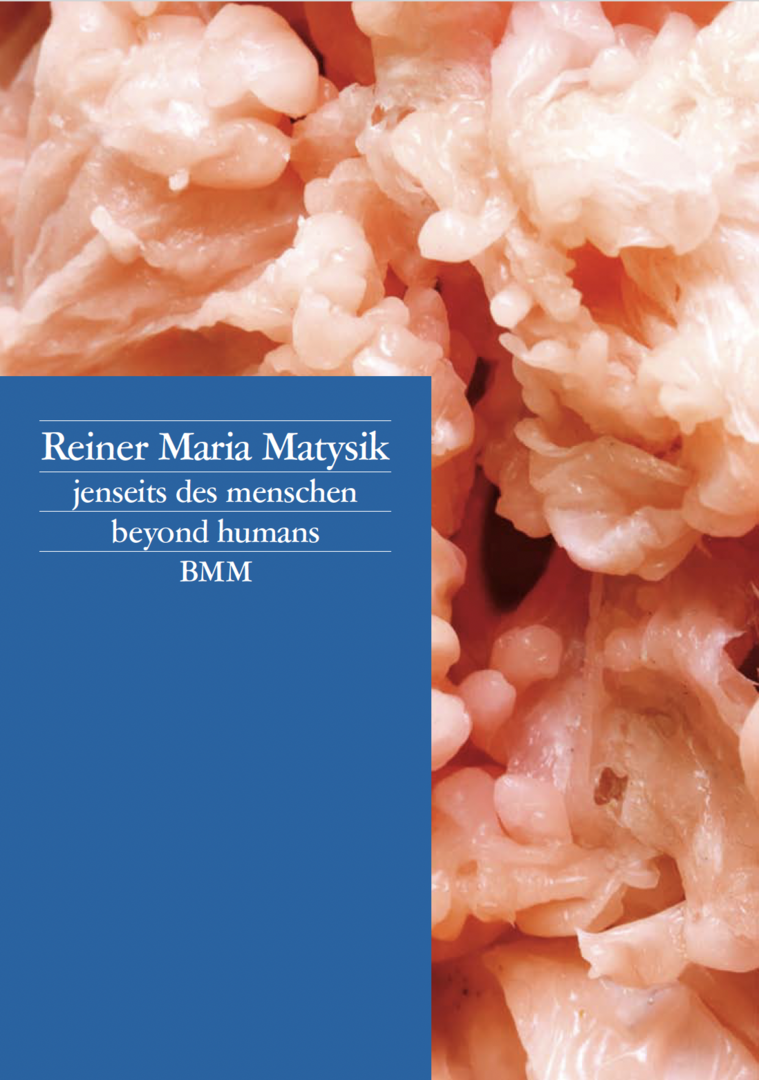
Reiner Maria Matysik: jenseits des menschen – beyond humans.
Ingeborg Reichle, Anita Hermannstädter, Thomas Schnalke
Ingeborg Reichle, Anita Hermannstädter, Thomas Schnalke (eds), Reiner Maria Matysik. jenseits des menschen - beyond humans. The Green Box, Berlin, 2010.
The exhibition "jenseits des menschen (beyond humans)", was running from September 16, 2010 to January 9, 2011, presenting new artworks by Berlin-based artist Reiner Maria Matysik as an intervention in the exhibition of Rudolf Virchow's specimens collection and in the ruins of the historical lecture theatre. The Berlin Medical History Museum of the Charité inaugurated the series "Interventions" in 2009 to open a new area of experimentation for contemporary art and promote dialogue between art and science. The exhibition was accompanied by a catalogue with articles by Inga Franke, Anita Hermannstädter, Reiner Maria Matysik, Ingeborg Reichle, and Thomas Schnalke. The exhibition and the catalogue was the outcome of a productive collaboration between the Charité's Medical History Museum and the Berlin-Brandenburg Academy of Sciences and Humanities (BBAW).
Die Ausstellung „jenseits des menschen“ zeigte vom 16. September 2010 bis zum 9. Januar 2011 Arbeiten des Berliner Künstlers Reiner Maria Matysik und reihte sich ein in die Serie „Interventionen“, die das Berliner Medizinhistorische Museum der Charité 2009 initiiert hat, um der Gegenwartskunst ein Experimentierfeld zu eröffnen und den Dialog zwischen Kunst und Wissenschaft zu befördern. Die Ausstellung wurde von einem Katalog (Deutsch/Englisch) begleitet mit Beiträgen von Inga Franke, Anita Hermannstädter, Reiner Maria Matysik, Ingeborg Reichle und Thomas Schnalke. „jenseits des menschen“ entstand in Zusammenarbeit der Charité und ihrem Medizinhistorischen Museum und der Berlin-Brandenburgischen Akademie der Wissenschaften (BBAW).
Maßlose Bilder: Visuelle Ästhetik der Transgression
Ingeborg Reichle, Steffen Siegel
Ingeborg Reichle, Steffen Siegel (eds.), Maßlose Bilder: Visuelle Ästhetik der Transgression. Wilhelm Fink Verlag, Munich, 2009.
Bildern wird überraschend viel zugetraut. Hinter der vielfach erhobenen Rede von der Macht der Bilder steht eine noch wenig erforschte Faszination für die Kraft von Bildmedien, die sich kaum in den engen Grenzen eines Bilderrahmens, einer Kinoleinwand oder eines Bildschirms bändigen lässt. Die Beiträge dieses Bandes, die von der Kunstgeschichte bis zur Kulturwissenschaft, von der Astrophysik bis zur Philosophie und Medienwissenschaft reichen, erörtern die vielfältigen Phänomene einer Transgression solcher Rahmungen. Das gemeinsame Interesse richtet sich hierbei auf Formen der Überschreitung des Visuellen und deren ästhetische, epistemologische, soziale und medientheoretische Funktionen; kurz: auf maßlose Bilder.
Mit Beiträgen von Sybille Krämer, James Elkins, W. J. T. Mitchell, Mark A. Halawa, Arno Schubbach, Steffen Siegel, Ulrike Hanstein, Michael Fürst, Jasmin Mersmann, Ingeborg Reichle, Daniel Bürkner, Rainer Gruber, Boris Goesl, Philipp Ekardt, Markus Rautzenberg, Nicole E. Stöcklmayr, Marcel Finke, Mirjam S. Brusius, Matthias Weiss, Silke Walther, and Karin Leonhard
The rhetoric about the power of images is a fascinating—as yet little explored—with the potency of visual media, a force that can scarcely be contained within the narrow confines of a picture frame, a cinema screen, or a monitor. The contributions to this volume—spanning fields from art history to cultural studies, and from astrophysics to philosophy and media studies—examine the diverse phenomena associated with the transgression of such boundaries. The shared focus here is on forms of transcending the visual and their aesthetic, epistemological, social, and media-theoretical functions; in short: on images that defy limits.
With contributions by Sybille Krämer, James Elkins, W. J. T. Mitchell, Mark A. Halawa, Arno Schubbach, Steffen Siegel, Ulrike Hanstein, Michael Fürst, Jasmin Mersmann, Ingeborg Reichle, Daniel Bürkner, Rainer Gruber, Boris Goesl, Philipp Ekardt, Markus Rautzenberg, Nicole E. Stöcklmayr, Marcel Finke, Mirjam S. Brusius, Matthias Weiss, Silke Walther, and Karin Leonhard.
Art in the Age of Technoscience: Genetic Engineering, Robotics, and Artificial Life in Contemporary Art
Ingeborg Reichle
Ingeborg Reichle, Art in the Age of Technoscience: Genetic Engineering, Robotics, and Artificial Life in Contemporary Art. With a preface by Robert Zwijnenberg. Translated by Gloria Custance. Funded by the Andrea von Braun Stiftung. Springer, Vienna, 2009.
Is science the new art? Taking this provocative question as her starting point, art historian Ingeborg Reichle examines the fascinating responses of contemporary artists when confronted with recent scientific and technological advances. In the last two decades a growing number of artists has left the traditional art venues to work in scientific environments like the laboratories of molecular biology, robotics, and artificial life. From this new art forms like „Transgenic Art“ and „Bio Art“ have emerged.
These art forms differ dramatically from traditional artistic approaches that explore life: they have crossed the boundaries between the artificial and the natural, and thus provoke passionate debates about the growing influence of science and technology. This first comprehensive survey presents an informative selection of significant artworks in 294 color illustrations and provides a broad overview of this new and relevant development in art.
Artists: Suzanne Anker, Brandon Ballengée, Louis Bec, Guy Ben-Ary, Oron Catts and Ionat Zurr, Catherine Chalmers, the Chapman Brothers, Jaq Chartier, Peta Clancy, Kevin Clarke, Critical Art Ensemble, Joe Davis, Marcel Duchamp, George Gessert, Peter Gerwin Hoffmann, Eduardo Kac, David Kremers, Steve Kurtz, William Latham, Edgar Lissel, Kazimir Malevich, Reiner Maria Matysik, Jon McCormack, Niki Nickl, Steve Miller, Simon Penny, Patricia Piccinini, Jane Prophet, Marc Quinn, Oliver Ressler, Ken Rinaldo, Christa Sommerer and Laurent Mignonneau, Gary Schneider, Karl Sims, Pam Skelton, Nell Tenhaaf, Herwig Türk, K. D. Thornton, Stephen Todd, Gail Wight, Adam Zaretsky and many other artists are presented.
Art and Digital Evolution
Ingeborg Reichle
Ingeborg Reichle, "Art and Digital Evolution: The Genetic Art of Christa Sommerer and Laurent Mignonneau." In: Christa Sommerer & Laurent Mignonneau. Interactive Art Research, ed. by Gerfried Stocker, Christa Sommerer, and Laurent Mignonneau. Springer Verlag, Vienna, New York, 2009, pp. 34-49.
Visuelle Modelle
Ingeborg Reichle, Steffen Siegel, and Achim Spelten
Visuelle Modelle. Ingeborg Reichle, Steffen Siegel, Achim Spelten (eds). Wilhelm Fink Verlag, Munich, 2008.
Die Beiträge dieses Bandes untersuchen aus kultur-, sozial- sowie naturwissenschaftlichen Perspektiven visuelle Modelle als Bildkörper unseres Wissens. Modelle sind unverzichtbare Werkzeuge unseren Denkens, Erkennens und Handelns. Als Bildkörper des Wissens steuern visuelle Modelle unsere Orientierung in der Welt. Sie geben Dingen, die selbst flüchtig, komplex oder unbestimmt sind, eine manifeste Gestalt. In Modellen erhalten abstrakte Strukturen von Wissen und Normen eine materielle Form. Doch entfalten Modelle aufgrund ihrer konkreten Eigenschaften eine nur schwer zu bändigende visuelle Kraft. Ihre Anschaulichkeit besitzt ein Eigenleben: Modelle legen Deutungen nahe; sie betonen und verdecken Unterschiede. An Modelle muss daher stets die Frage nach Gewinn und Verlust für unsere Wahrnehmung und Erfahrung gestellt werden. Die Interpretation von Modellen ist immer auch eine Interpretation unserer eigenen Wahrnehmung. Daher sind visuelle Modelle stets zugleich Modelle der Visualität.
Mit Beiträgen von Carolin Artz, Philipp Ekardt, Sebastian Gießmann, Sebastian Vincent Grevsmühl, Jens Gulden, Inge Hinterwaldner, Bernd Mahr, Catharina Manchanda, Damaris Odenbach, Ingeborg Reichle, Stefan Riekeles, Tobias Schlechtriemen, Steffen Siegel, Achim Spelten, Samuel Strehle, Annemieke R. Verboon, Reinhard Wendler und Katrin Käthe Wenzel.
The contributions in this volume examine visual models—as embodied forms of knowledge—from the perspectives of cultural studies, the social sciences, and the natural sciences. Models are indispensable tools for our thinking, cognition, and action. As embodiments of knowledge, visual models guide how we orient ourselves in the world; they give tangible form to things that are otherwise fleeting, complex, or indeterminate. Within models, abstract structures of knowledge and norms acquire a material shape. Yet, due to their specific characteristics, models exert a visual power that is difficult to contain. Their vividness takes on a life of its own: models suggest interpretations, while simultaneously highlighting and obscuring differences. We must therefore always ask what is gained and what is lost regarding our perception and experience when we engage with models. Interpreting models is always, at the same time, an interpretation of our own perception. Thus, visual models are invariably models of visuality as well.
With contributions by Carolin Artz, Philipp Ekardt, Sebastian Gießmann, Sebastian Vincent Grevsmühl, Jens Gulden, Inge Hinterwaldner, Bernd Mahr, Catharina Manchanda, Damaris Odenbach, Ingeborg Reichle, Stefan Riekeles, Tobias Schlechtriemen, Steffen Siegel, Achim Spelten, Samuel Strehle, Annemieke R. Verboon, Reinhard Wendler, and Katrin Käthe Wenzel.
Verwandte Bilder: Die Fragen der Bildwissenschaft
Ingeborg Reichle, Steffen Siegel, Achim Spelten
Verwandte Bilder: Die Fragen der Bildwissenschaft. Ingeborg Reichle, Steffen Siegel, Achim Spelten (eds.). Kulturverlag Kadmos, Berlin, 2007.
Das, was wir "Bilder" nennen, ist keine sehr einheitliche Gemeinschaft. Aber trotzdem scheinen sie alle miteinander in Verbindung zu stehen. Ein Ölgemälde und ein Diagramm, ein Radarbild und eine Madonnenfigur, eine Landkarte und eine Mandelbrot-Menge erschließen sich uns auf sehr verschiedenen Wegen. Bildlichkeit ist kein Merkmal, das überall die gleiche Form annimmt und das überall auf gleiche Weise wahrnehmbar ist. Die Fragen der Bildwissenschaft richten sich daher nicht auf das Bild im Singular, sondern auf das weit gespannte Netz von Bildverwandtschaften, welches sie alle als eine Welt des Sichtbaren zusammenhält.
Mit Beiträgen von Viktor Bedö, Jan Peter Behrendt, Sebastian Bucher, Marcel Finke, Sebastian Grevsmühl, Sebastian Gießmann, Barbara Kopf, Alexandra Lembert, Roland Meyer, Ingeborg Reichle, Marius Rimmele, Michael Rottmann, Nina Samuel, Silvia Seja, Steffen Siegel und Achim Spelten.
Kunst aus dem Labor: Zum Verhältnis von Kunst und Wissenschaft im Zeitalter der Technoscience
Ingeborg Reichle
Ingeborg Reichle, Kunst aus dem Labor: Zum Verhältnis von Kunst und Wissenschaft im Zeitalter der Technoscience. Springer, Wien, 2005.
Das Verhältnis von Kunst und Wissenschaft war immer vielschichtig und ist heute im Zeitalter der Technosciences überaus prekär geworden. So erstaunt es nicht, dass schon vor Jahren zahlreiche Künstler das Arbeiten im Atelier gegen das Forschen im Labor eingetauscht haben. Seither begleiten Künstler die Transformation der modernen Naturwissenschaften hin zu den Technosciences seismographisch. Oszillierend zwischen der Technisierung des Lebendigen in den Biowissenschaften und der Verlebendigung der Technik innerhalb der Erforschung des künstlichen Lebens haben sich Protagonisten der Transgenic Art und der Artificial Life Art an die Aneignung von Methoden und Verfahren der Life Sciences herangewagt und immer neue Kunstformen entworfen.
Die umfassende Aufarbeitung dieser neuen Kunstrichtungen stellt Künstler und Künstlerinnen wie Suzanne Anker, Louis Bec, Oron Catts und Ionat Zurr, Catherine Chalmers, Jaq Chartier, Kevin Clarke, Critical Art Ensemble, Joe Davis, George Gessert, Peter Gerwin Hoffmann, Eduardo Kac, Pamela Davis Kivelson, David Kremers, Steve Kurtz, William Latham, Reiner Maria Matysik, Jon McCormack, Steve Miller, Simon Penny, Jane Prophet, Marc Quinn, Oliver Ressler, Ken Rinaldo, Christa Sommerer und Laurent Mignonneau, Gary Schneider, Pam Skelton, Nell Tenhaaf, K. D. Thornton, Gail Wight und Adam Zaretsky und viele weitere Kunstprojekte umfassend vor.
The bigger picture
Ingeborg Reichle
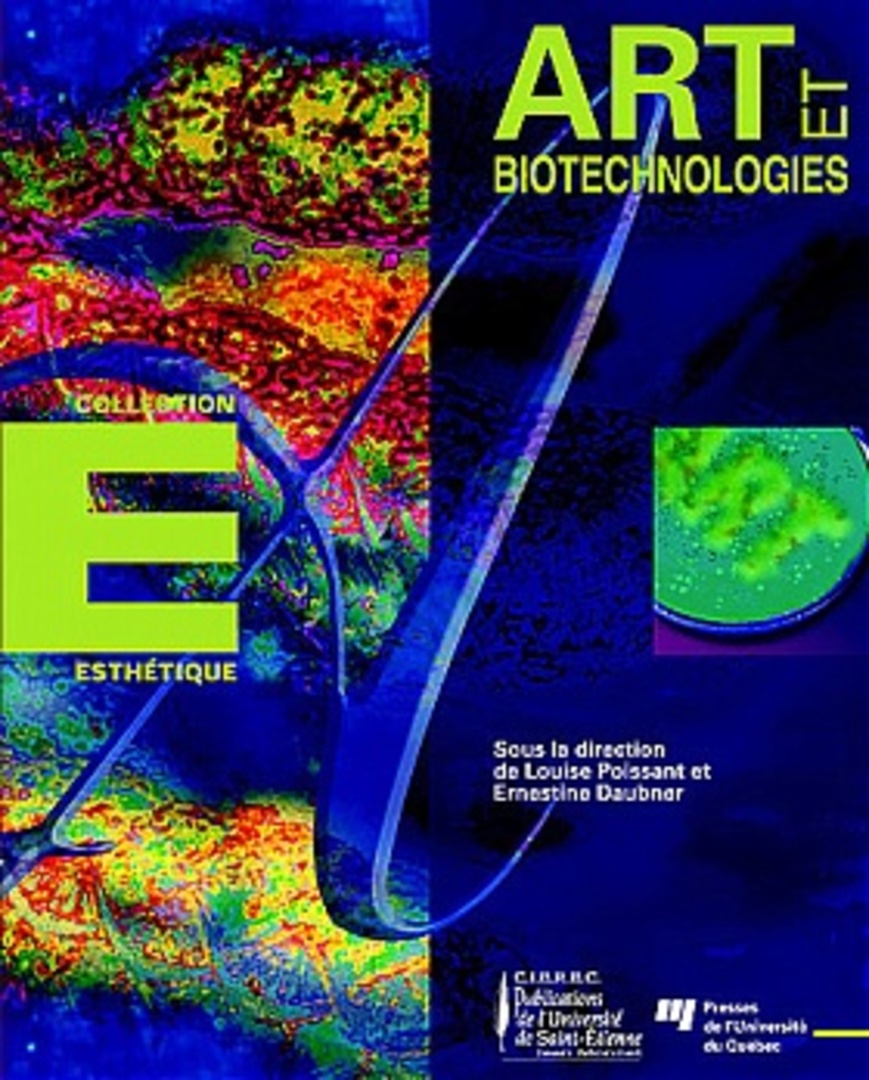
Ingeborg Reichle, "Au confluent de l’art et de la science: le génie génétique en art contemporain." In: Ernestine Daubner and Louise Poissant (eds.), Art et Biotechnologie. Presses de l’Université du Québec, Québec, 2005, pp. 247-261.
Bildende Kunst
Ingeborg Reichle
Ingeborg Reichle, "Bildende Kunst." In: Klaus Sachs-Hombach (ed.), Bildwissenschaften. Suhrkamp Verlag, Frankfurt a. M., 2005, pp. 320-334.

Ingeborg Reichle, "Fotografie und Lichtbild: Die unsichtbaren Bildmedien der Kunstgeschichte." In: Anja Zimmermann (ed.), Sichtbarkeit und Medium: Austausch, Verknüpfung und Differenz von naturwissenschaftlichen und ästhetischen Bildstrategien. Hamburg University Press, Hamburg, 2004, pp. 177-191.
Die Institutionalisierung der Kunstgeschichte als wissenschaftliche Disziplin verlief an Deutschen Universitäten im 19. Jahrhundert zeitgleich mit dem Einzug technisch reproduzierter Bilder von Kunstwerken in das Arbeiten von Kunsthistorikern. Gegen Ende des 19. Jahrhunderts hatten sich aus einer Vielzahl von Reproduktionsverfahren die Fotografie und die Lichtbildprojektion als anerkannte Medienpraxis sowohl in der Forschung als auch in der Vermittlung kunsthistorischer Inhalte durchgesetzt. Heute sind diese Medien unentbehrlicher Bestandteil der Disziplin Kunstgeschichte und werden in ihrer praktischen Anwendung nicht mehr hinterfragt. In der Folge sind diese Medien mehr oder weniger unsichtbar geworden, unsichtbar insofern, als die Art und Weise, wie diese Bildmedien den Blick auf die reproduzierten Gegenstände und Kunstwerke strukturieren und organisieren, nicht mehr thematisiert wird und die Auseinandersetzung darüber im Alltag des kunstwissenschaftlichen Arbeitens verstummt ist. Noch bis zum Ende des 19. Jahrhunderts wurde der ambivalente Status der Fotografie in der damals noch jungen Disziplin Kunstgeschichte diskutiert und in ihrem Verhältnis zu anderen Reproduktionsmedien wie dem Kupferstich oder der Lithografie befragt.
Seit dem ausgehenden 18. Jahrhundert hatte sich ein kommerziell höchst erfolgreicher Markt von Kunstwerkreproduktionen in Europa etabliert, in dem die fotomechanischen Reproduktionsverfahren, die durch Louis-Jacques-Mande Daguerre und William Henry Fox Talbot im Jahre 1839 öffentlich bekannt wurden, nur zwei Verfahren unter vielen darstellten. Doch schon zwei Jahrzehnte nach der Erfindung der Fotografie hatte sich ein überaus dynamisch expandierender Markt für Fotografien von Kunstwerken herausgebildet, wobei ältere Reproduktionsverfahren wie zum Beispiel die Lithografie oder der Kupferstich nicht verdrängt wurden, sondern in den verschiedenen Marktsegmenten ebenfalls stark nachgefragt waren und sich zahlreiche Hybridverfahren herausbildeten. In der zweiten Hälfte des 19. Jahrhunderts diskutierten Kunsthistoriker die Vor- und Nachteile des fotomechanischen Reproduktionsverfahrens von Kunstwerken insbesondere im Hinblick auf den Kupferstich, da mit dem Einzug von Fotografie (Camera obscura) und Lichtbild9 (Laterna magica) in das wissenschaftliche Arbeiten zwischen Kunsthistoriker und Kunstwerk nun eine technische Apparatur trat, die den Blick auf die Kunst neu organisierte. An die Stelle der künstlerischen Vermittlung der großen Kunst durch den Kupferstecher, der sich in die Intention des Künstlergenies einfühlen konnte und dem somit allein zugesprochen wurde, die Größe des Kunstwerkes wiedergeben zu können, trat nun die Camera obscura mit ihrer vermeintlich vollkommenen Wiedergabe der Wirklichkeit. Konnte der Stecher zwischen Haupt- und Nebensache im Bilde differenzieren und sich auf die Wiedergabe der Kernaspekte der künstlerischen Intention konzentrieren, gab das Auge der Kamera undifferenziert jedes Detail wieder. Das Für und Wider der Kontroverse über die manuelle und die technisch-apparative Reproduktion von Kunstwerken wurde von den gleichen Argumenten beherrscht, allerdings unter umgekehrten Vorzeichen. So führte die Argumentation der Verfechter des Kupferstichs, die der manuellen Reproduktionsgrafik einen eigenständigen Kunststatus zuschrieb, schließlich zu einer Distanzierung von dieser Technik
Remaking Eden: On the reproducibility of images and the body in the age of virtual reality and genetic engineering
Ingeborg Reichle
Ingeborg Reichle, "Kunst und Biomasse: Zur Verschränkung von Biotechnologie und Medienkunst in den 90er Jahren." In: kritische berichte, no. 1, 2001, pp. 23-33.
Der achte Tag der Schöpfung: Zu utopischen Körperentwürfen in der zeitgenössischen Kunst
Ingeborg Reichle
Ingeborg Reichle, "Der achte Tag der Schöpfung. Zu utopischen Körperentwürfen in der zeitgenössischen Kunst." In: Kristiane Hasselmann (ed.), Utopische Körper: Visionen künftiger Körper in Geschichte, Kunst und Gesellschaft. Fink Verlag, Munich, 2004, pp. 87-98.
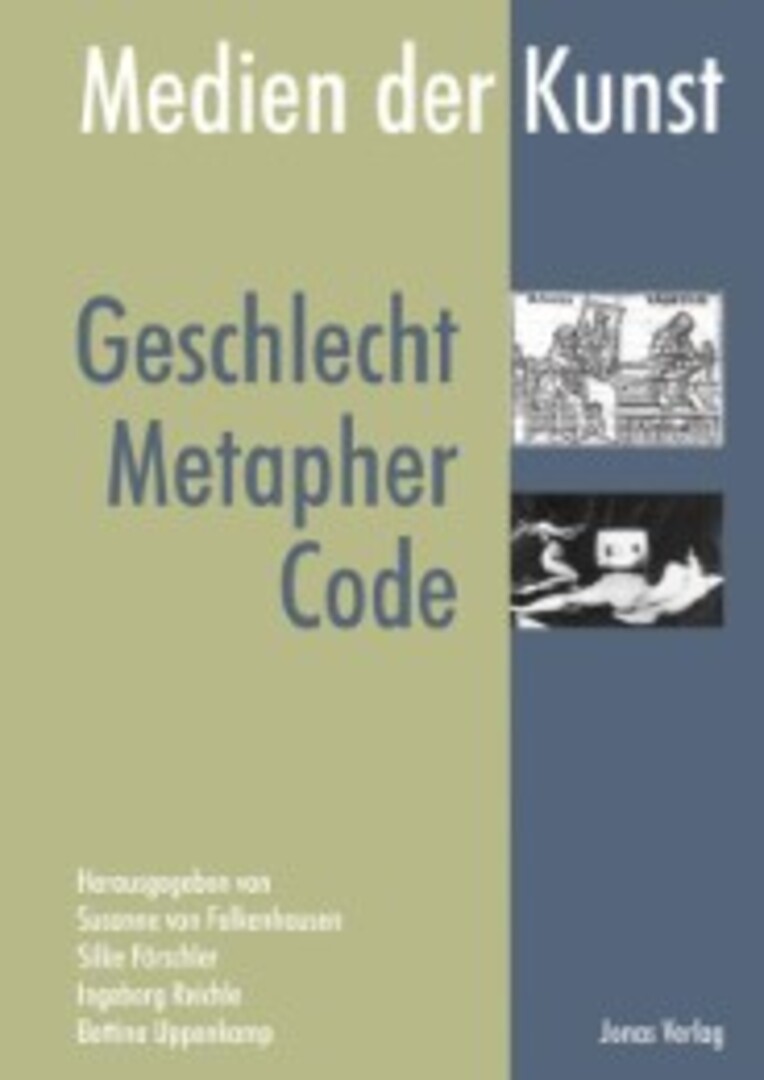
Medien der Kunst: Geschlecht, Metapher, Code
Ingeborg Reichle, Susanne von Falkenhausen, Bettina Uppenkamp, Silke Förschler
Medien der Kunst. Geschlecht, Metapher, Code. Edited by Ingeborg Reichle, Susanne von Falkenhausen, Silke Förschler, and Bettina Uppenkamp, Jonas Verlag, Marburg 2004.
With contributions by Hanne Loreck, Karin Harrasser, Verena Kuni, Martina Pachmanova, Yvonne Volkart, Sigrid Adorf, Angela Dimitrakaki, Ute Vorkoeper, Linda Hentschel, Irene Nierhaus, Gabriele Genge, Kerstin Brandes, Dagmar Fink, Susanne Lummerding, Manuela Barth, Barbara U. Schmidt, Susanne Holschbach, Silke Förschler, Elke Frietsch, Mechthild Fend, Silke Tammen, Kristina Domanski, and Laima Kreivyte.
PROMETHEUS – Das verteilte digitale Bildarchiv für Forschung und Lehre
Ingeborg Reichle, Horst Bredekamp
Ingeborg Reichle, Horst Bredekamp, "PROMETHEUS – Das verteilte digitale Bildarchiv für Forschung und Lehre. Ein internetgestütztes Konzept zur Zusammenführung heterogener Wissensquellen am Kunstgeschichtlichen Seminar der Humboldt-Universität zu Berlin." In: Humboldt Spektrum, no. 1, 2003, pp. 48-53.
Seit Jahrzehnten werden von zahlreichen Institutionen Anstrengungen unternommen, analoge Bildarchive wie Foto- und Diatheken zu digitalisieren und im WWW bereitzustellen. Aus der Motivation heraus, diese verteilten kunstwissenschaftlichen Bildressourcen in der kunstgeschichtlichen Lehre effektiver zu nutzen, versucht der vom Bundesministerium für Bildung und Forschung (bmb+f) über das Hochschulprogramm »Neue Medien in der Bildung« geförderte Projektverbund Prometheus diese bereits bestehenden proprietären Systeme zusammenzuführen (www.prometheus-bildarchiv.de). Das Grundproblem der mangelnden Kompatibilität klassischer Datenbankprojekte soll durch Prometheus mithilfe der Überführung der bereits bestehenden Datensätze in ein rein syntaktisch operierendes Austauschformat auf Basis der Auszeichnungssprache XML überwunden werden. Der Zugriff auf die ortsund systemunabhängig vernetzten Ressourcen erfolgt ausschließlich über das WWW.
system_kgs: Digitales Publizieren für die kunstgeschichtliche Lehre im Internet
Ingeborg Reichle, Thomas Lackner
Ingeborg Reichle, "Kunst und Biomasse: Zur Verschränkung von Biotechnologie und Medienkunst in den 90er Jahren." In: kritische berichte, no. 1, 2001, pp. 23-33.
Das Verhältnis von Kunst und Naturwissenschaften war seit jeher vielfältig und komplex. Seit dem Einzug laborwissenschaftlicher Methoden in die Kunst wird dieses Verhältnis zudem überaus prekär. Künstler der Transgenic Art wie Eduardo Kac und Joe Davis projektieren die Fortschreibung der Evolution durch die Kunst und lösen mit ihren imaginierten Grenzüberschreitungen ein gewisses Unbehagen aus, da diese zu einer Verwirrung der traditionellen ontologischen Ordnung führen könnten.
Zu Beginn des neuen Jahrhunderts ergreift das Pathos des Aufbruchs vor allem die Biologie, die sich zur Leitwissenschaft der Zivilisation aufzuschwingen beginnt und sich anstellt, die seit Newton führende Wissenschaft Physik abzulösen. Die neuen Gen- und Biotechnologien gelten als Anwärter auf die Schlüsseltechnologien kommender Dekaden, besonders jene, die den genetischen Code des Lebens entschlüsseln. „Wir haben immer gedacht, unser Schicksal steht in den Sternen. Jetzt wissen wir, dass es größtenteils in unseren Genen liegt“, verkündet James D. Watson, erster Direktor des Human Genome Project, eines von der amerikanischen Regierung unterstützten Milliardenprogramms, mit dem Ziel der völligen Entschlüsselung der menschlichen DNA. Watson war in den frühen fünfziger Jahren zusammen mit Francis Crick maßgeblich an der Entdeckung des Bauplans der DNA beteiligt und ist heute der Leiter eines der bedeutendsten Genforschungszentren der USA, dem Laboratory of Quantitativ Biology in Cold Spring Harbor auf Long Island, New York.
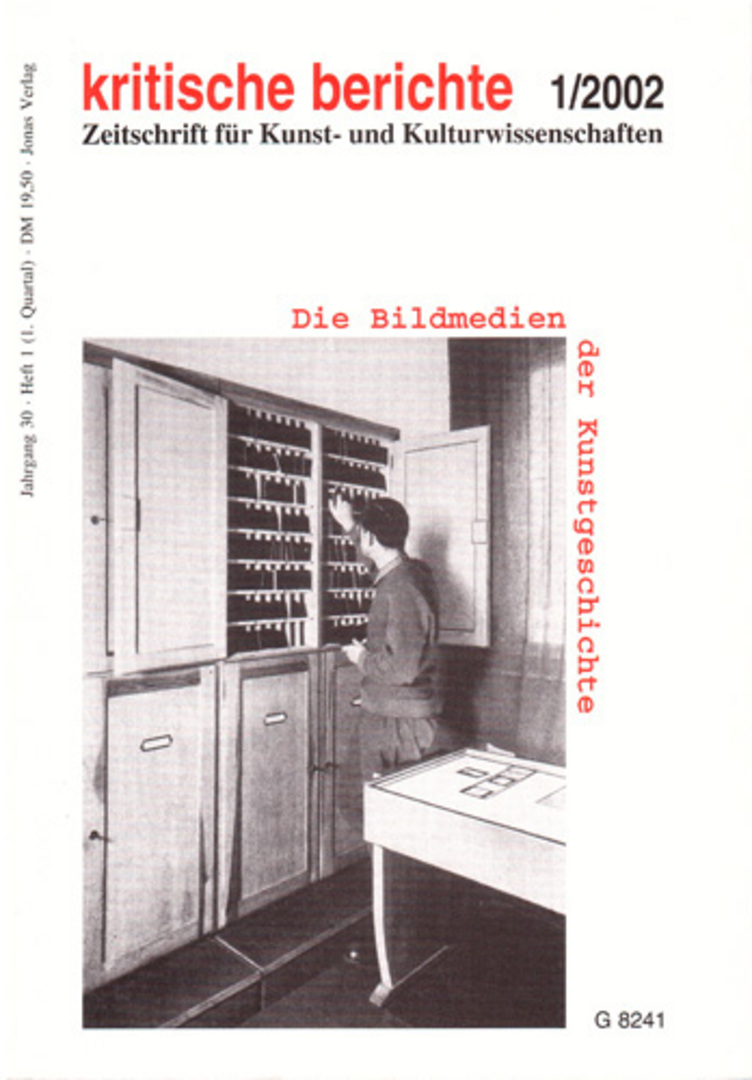
Medienbrüche
Ingeborg Reichle
Ingeborg Reichle, "Medienbrüche." In: kritische berichte: Die Bildmedien der Kunstgeschichte, no. 1, 2002, pp. 40-56.
Jedem Medienwandel folgt eine Verschiebung der Diskurse, so zuletzt auch angesichts der zunehmenden Digitalisierung des Bildes. Die unabweisbare Relevanz der fortschreitenden technischen Neuerungen und der immer deutlicher hervortretenden Umwälzungen durch die neuen Medien lassen deren Integration und Etablierung in die Wissenschaftspraxis als folgerichtige Anpassung des Wissenschaftssystems an den gesellschaftlichen Wandel begreifen. Die digitale Revolution besetzt heute immer größere Bereiche des Feldes mit Namen Bild und wirkt zudem auf die analoge Fotografie zurück, jenes im Verschwinden begriffene Medium, das den Prozess der Institutionalisierung und Verankerung der Kunstgeschichte als wissenschaftliche Disziplin an den Universitäten von der Jahrhundertwende an stetig begleitete.
Seit der Durchsetzung und breiten Akzeptanz der Fotografie und der Lichtbildprojektion im kunstwissenschaftlichen Hörsaal vor mehr als 100 Jahren ist das stehende Lichtbild als das adäquate Medium zur Veranschaulichung von Kunstwerken mit einer Ausschließlichkeit akzeptiert worden, die an den Einsatz anderer Medien kaum mehr denken ließ. Vormals bloß optische Hilfsmittel brachten mit der Zeit eine »diskursive Maschinerie« hervor, die technischen Apparate schlichen sich in den Prozess kunstwissenschaftlicher Erkenntnisgewinnung ein und wirkten auf Forschungsthemen und -methoden. Die Integration jener heute für selbstverständlich erachteten Medien der Kunstgeschichtsvermittlung wurde im ausgehenden 19. Jahrhundert von kontroversen Diskussionen begleitet und jene damals »neuen Medien« Fotografie und Lichtbildprojektion wurden in ihrem Verhältnis zur Kunst, insbesondere zur Malerei und zu älteren Reproduktionsverfahren wie Kupferstich, Lithographie und Holzstich, diskutiert und positioniert. Die gegenwärtige Aneignung der Bilder durch den Computer und dessen Metamorphose von einer Universalmaschine zum universalen Medium - und somit in der Folge auch zum Wegbereiter einer digitalen Wissensordnung - stellt sich daher für eine in erster Linie bild- und mediengestützt lehrende Disziplin Kunstgeschichte als eine nicht zu unterschätzende Herausforderung dar. Seit einigen Jahren zeichnet sich an den Hochschulen ein Wandel im Einsatz medialer Arbeits- und Lehrmittel ab, der Umgang mit digitalisierten Text- und Bildbeständen ist im Alltag von Forschung und Lehre inzwischen gängige Praxis. Die Transformation der medialen Aspekte von Forschungs- und Lehrmitteln hat für das Fach Kunstgeschichte heute möglicherweise viel weitreichendere Konsequenzen als für andere Disziplinen, da die Gegenstände der Kunstgeschichtsschreibung sich immer weniger als originäre Objekte darstellen, sondern vielmehr als deren mediale Reproduktionen.
Seit der Etablierung des Faches Kunstgeschichte an den Universitäten in der zweiten Hälfte des 19. Jahrhunderts ist das technisch reproduzierte Bild das zentrale Medium sowohl in der Forschung als auch in der Vermittlung von Lehrinhalten. Wie in vielen universitären Disziplinen so werden auch in der Kunstgeschichte heute den analogen Medien nun mehr digitale an die Seite gestellt und werden hier ebenso sinnvolle Hard- und Softwareleistungen zur Integration digitaler Medien angedacht und vereinzelt umgesetzt. Doch gerät bei den aktuellen Konzeptionen zum Einsatz neuer Medien in die kunstwissenschaftliche Vermittlung oftmals aus dem Blickfeld, dass wohl nur über eine umfassende Erforschung auch der »traditionellen« medialen Inszenierungen der Kunstgeschichte und deren medialen Grundlagen ein notwendiges Bezugssystem zu einer Integration und den potenziellen Einsatzmöglichkeiten digitaler Medien im kunstwissenschaftlicher Arbeiten erfolgen kann. So verwundert es kaum, dass sich heute im Zuge einer breiten Etablierung der neuen Medien eine historische Rückschau anbietet, die die so genannten »alten« Medien in ein neues Licht rückt. Im historischen Rückblick wird zudem rasch erkennbar, in welch erstaunlichen Parallelen die heutige Diskussion um die Akzeptanz der neuen Medien im Vergleich zur Integration der Fotografie und der Lichbildprojektion vor über hundert Jahren verläuft.
Kunst und Biomasse: Zur Verschränkung von Biotechnologie und Medienkunst in den 90er Jahren
Ingeborg Reichle
Ingeborg Reichle, "Kunst und Biomasse: Zur Verschränkung von Biotechnologie und Medienkunst in den 90er Jahren." In: kritische berichte, no. 1, 2001, pp. 23-33.
TechnoSphere: Körper und Kommunikation im Cyberspace
Ingeborg Reichle
Ingeborg Reichle, "TechnoSphere: Körper und Kommunikation im Cyberspace." In: Klaus Sachs-Hombach (ed.), Bildhandeln. Interdisziplinäre Forschungen zur Pragmatik bildhafter Darstellungsformen. Reihe Bildwissenschaft, vol. 3. Scriptum Verlag, Magdeburg, 2001, pp. 193-204.
Neue Medien in der Bildung: Chancen und Herausforderungen kooperativen Lehrens und Lernens in der Kunstgeschichte
Ingeborg Reichle, Thomas Lackner, Dorothee Wiethoff
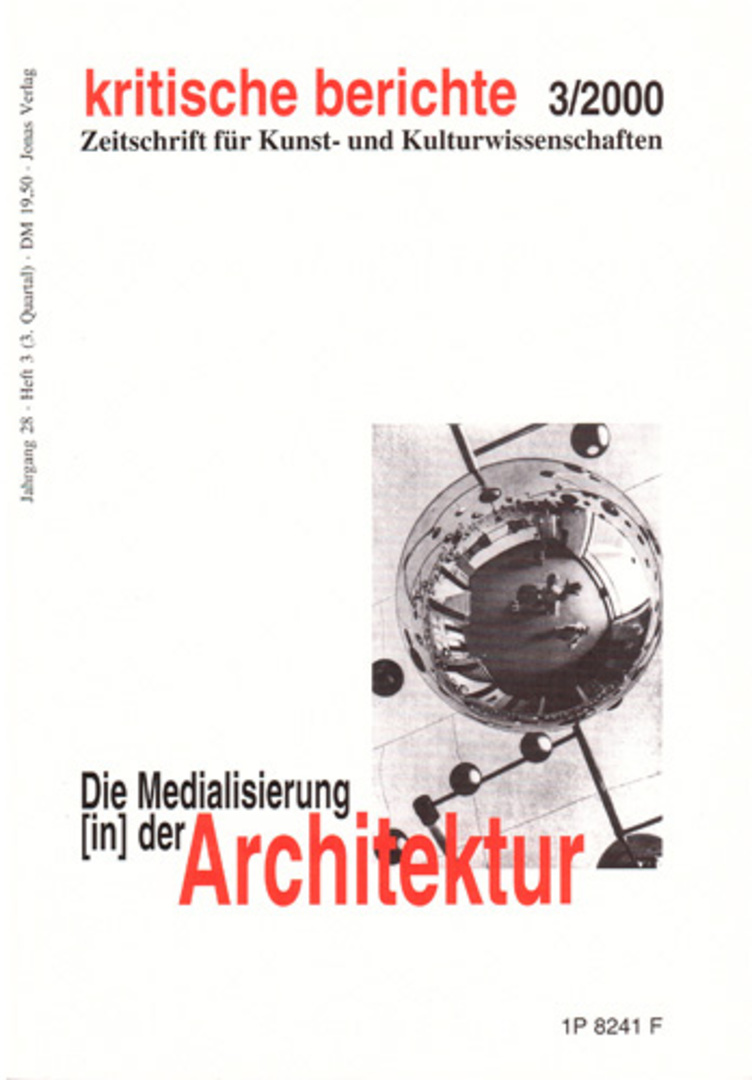
Ingeborg Reichle, Thomas Lackner and Dorothee Wiethoff, "Neue Medien in der Bildung: Chancen und Herausforderungen kooperativen Lehrens und Lernens in der Kunstgeschichte." In: kritische berichte, no. 3, 2000, pp. 87-90.
Die Vermittlung und Aneignung kunstwissenschaftlicher Inhalte ist untrennbar verbunden mit den Methoden und Vorgaben der diesen Inhalten zugrunde liegenden technologischen Strukturen. Während in der Frühzeit kunstwissenschaftlicher Wissensvermittlung zunächst die unmittelbare Bezugnahme auf das Original sowie die Lichtbildprojektion im Vordergrund stand, rückt neuerdings das World Wide Web mit neuen Formen der Interaktion zunehmend in den Mittelpunkt des Interesses der Bildungstheoretiker. Dass jedoch interaktivem (Online-)Lernen und -Lehren in der Kunstgeschichte ein spezifisches Selbstverständnis der an diesen neuartigen Vermittlungsprozessen beteiligten Institutionen vorausgehen muss, zeigt der vorliegende Aufsatz.